

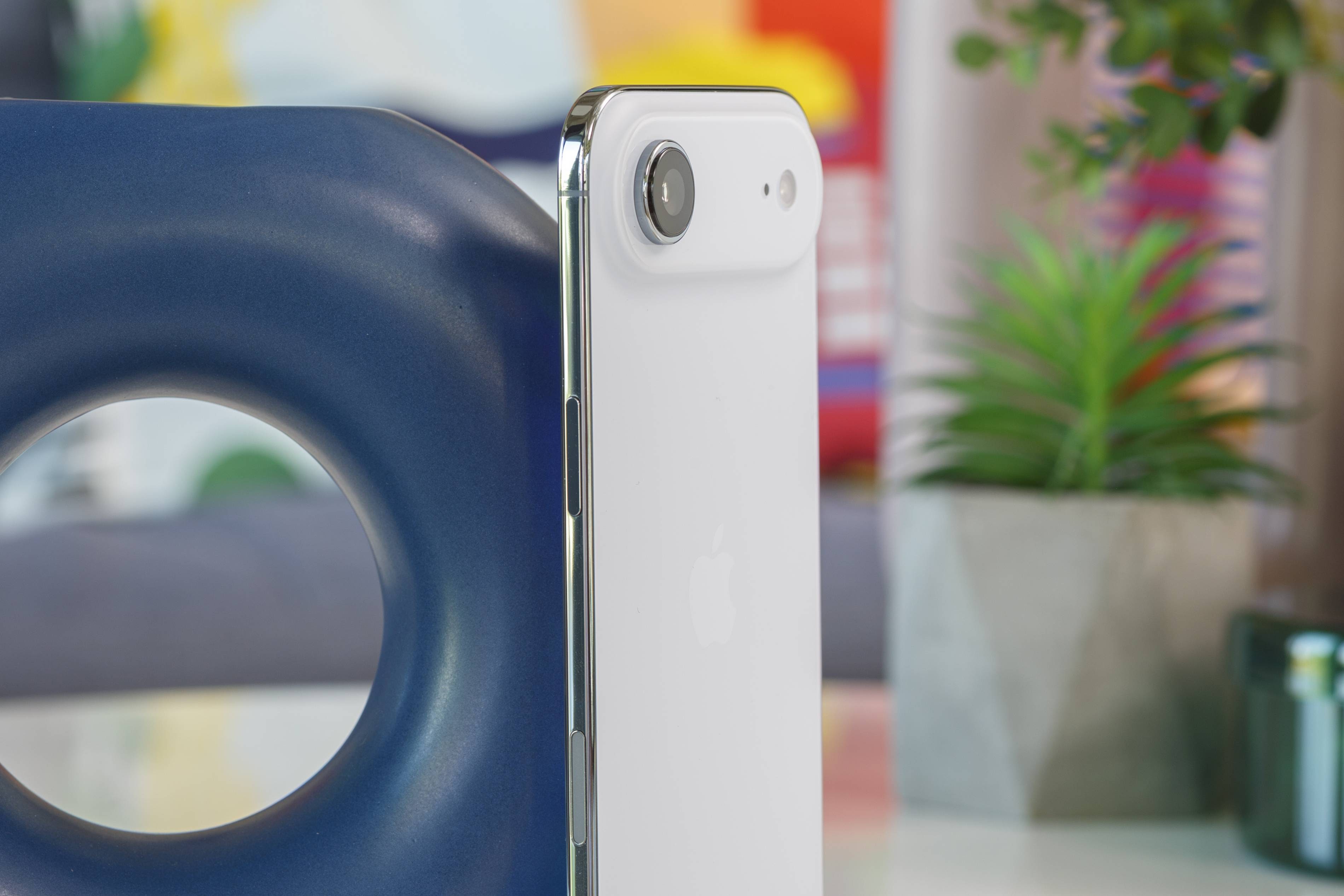
Unpacking the iPhone Air's Steep Depreciation Curve and Market Realities
The smartphone market is a relentless arena, constantly shifting under the weight of innovation, consumer demand, and strategic branding. Yet, even within this volatile landscape, certain trends grab our attention, demanding a deeper look. A recent report from SellCell, widely covered by outlets including GSMArena Reviews, has cast a stark light on the iPhone 17 series, specifically highlighting the iPhone Air’s startlingly rapid depreciation. We find ourselves questioning if this isn't merely a blip, but rather a potent indicator of deeper issues within Apple's evolving product strategy.
Our analysis suggests that the iPhone Air, intended perhaps as a more accessible premium device, is struggling to hold its value at a pace that is frankly, unprecedented for an Apple product of this caliber in recent memory. This isn't just about a few percentage points; we're observing a significant erosion of value that could redefine consumer perception of Apple's 'Air' branding.
- The iPhone Air has lost between 40.3% and 47.7% of its initial value within just ten weeks, depending on storage, significantly underperforming other iPhone 17 models.
- This rapid depreciation is the steepest for any iPhone model since the iPhone 14 Plus and certain iPhone 13 mini variants in 2022, signaling potential long-term market uncertainty for the Air line.
- While the broader iPhone 17 series shows stronger value retention (averaging 34.6% depreciation), the Air's struggle highlights a potential misstep in product positioning and perceived value.
- Consumers should exercise caution when considering the iPhone Air, as its resale value trajectory indicates a less sound investment compared to its 'Pro' counterparts.
Methodology, Historical Context, and the iPhone Air's Place in Apple's Lineup
The core of this unsettling revelation stems from a SellCell report, which meticulously analyzed trade-in price data from over 40 US-based buyback companies. This extensive dataset, compiled over a ten-week period, offers a robust, real-time snapshot of the market's response to the iPhone 17 series. What emerged was a stark performance disparity: while the overall iPhone 17 family experienced an average depreciation of 34.6% — a figure that actually fares better than the iPhone 16 (39.0%) and iPhone 14 (36.6%) lines at the same stage — the iPhone Air lagged far behind.
Specifically, the iPhone Air’s depreciation averaged an alarming 44.3% across its storage variants, with individual configurations plummeting by as much as 40.3% for the 256GB base model (MSRP $999) and a staggering 47.7% for the 1TB version. To put this into perspective, this places the iPhone Air's resale performance among the weakest seen since the iPhone 14 Plus and certain iPhone 13 mini variants in 2022. This is a significant deviation from Apple's historical trend, where iPhones typically demonstrate superior value retention compared to many Android counterparts, as we’ve often observed in our NexaSpecs' Top 10 Trending Phones analyses.
The iPhone Air itself was introduced as part of the nineteenth generation of iPhones, replacing the 'Plus' series and aiming for a lightweight design with enhanced features. It boasts impressive specifications: a 6.5-inch Super Retina XDR OLED display with 3000 nits peak brightness and a dynamic refresh rate of up to 120Hz, powered by the Apple A19 Pro system-on-chip. With a depth of just 5.6 mm, it is even marketed as the thinnest iPhone ever made. It includes a 48MP Fusion camera system, an 18MP Center Stage front camera, and supports 5G, Wi-Fi 7, and dual eSIM.
However, despite these ostensibly premium features, the market appears unconvinced, particularly when juxtaposed against the stronger retention of the iPhone 17 Pro Max models, which depreciated by only 26.1% for the 256GB variant. This divergence signals that consumers may not be perceiving the 'Air' differentiation as a value-add that justifies its initial price point. We've seen similar dynamics at play when new models flood the market, often impacting the value of preceding, less-distinguished models.
Critical Analysis: Why the iPhone Air's Value is Deflating So Rapidly
From our perspective, the iPhone Air’s precipitous drop in resale value isn't an isolated incident; it's a symptom of several intertwined market forces and potentially, a strategic miscalculation by Apple. We believe a significant factor is the increasingly saturated smartphone market, where iterative updates struggle to ignite the same excitement or perceived value as truly transformative innovations. When we consider the incremental advancements in many modern devices, it's fair to ask if the 'Air' moniker, traditionally associated with groundbreaking thinness and lightness, still resonates as a premium differentiator.
We've discussed at length how technological advancements, while exciting, often accelerate the depreciation of older models as consumers gravitate towards the latest features. The iPhone Air, while featuring the A19 Pro chip and a 48MP camera, might not offer enough 'game-changing' innovation to stand out in an increasingly crowded high-end segment, especially when compared to the OnePlus 15's 165Hz update or the advanced AI capabilities we're seeing in other ecosystems like Nothing OS 4.0. The market has grown accustomed to high-spec devices, and the 'Air' branding, despite its physical thinness, might not convey a sufficient leap forward in user experience or core functionality to command sustained premium value.
Another critical element is Apple's own dense product matrix. With the iPhone 17, iPhone 17 Pro, and iPhone 17 Pro Max all vying for consumer attention, the iPhone Air's position becomes precarious. Is it a 'lite' version of the Pro, or a 'premium' version of the standard iPhone? The line has become blurred, and in such an environment, the 'Pro' models, with their unequivocally top-tier features, often become the default choice for those seeking maximum value retention. The 'mini flagship' concept, as seen with devices like the vivo X300, often faces similar challenges in carving out a distinct and sustainable market niche.
Furthermore, broader economic pressures cannot be ignored. In a climate where discretionary spending is scrutinized, consumers are increasingly pragmatic about their tech investments. A phone that loses nearly half its value in mere weeks becomes a less attractive proposition, even for brand loyalists. This rapid devaluation creates a perception of a 'sales flop,' as GSMArena Reviews initially suggested, which can in turn deter new buyers and accelerate the downward spiral of resale value.
✅ Pros & ❌ Cons of the iPhone Air's Depreciation
| ✅ Pros | ❌ Cons |
|
|
What This Means for You: Navigating the iPhone Air's Market Volatility
For the average consumer, this report on the iPhone Air's depreciation carries significant weight. If you're an early adopter who purchased the iPhone Air at launch, our sympathies. We understand the sting of seeing a significant investment diminish so rapidly. This situation underscores the importance of carefully considering the long-term value retention of any high-end smartphone, a topic we frequently cover in our consumer guides, such as our Samsung Galaxy S25 Ultra Black Friday Deal: NexaSpecs' Ultimate Buying Guide.
For those contemplating a purchase, the message is clear: exercise caution. While the iPhone Air offers a sleek design and formidable performance, its current market trajectory suggests it is a less sound financial investment compared to other models in the iPhone 17 series. Waiting a few months for prices to stabilize, or exploring the robust second-hand market, could yield substantial savings. Indeed, the adage "time your sale" applies equally to timing your purchase when it comes to rapidly depreciating assets.
From Apple's perspective, this data presents a challenging dilemma. The 'Air' branding, once a hallmark of revolutionary design, appears to be struggling to find its footing in a market demanding more than just thinness. This may necessitate a re-evaluation of its product differentiation strategy, perhaps moving beyond purely aesthetic appeals to more substantive, unique functionalities that justify its price point and ensure stronger resale value. The contrast with the strong performance of the Samsung Galaxy Watch Ultra 2, which aims to redefine its segment, serves as a reminder that clear value propositions are paramount.
The Verdict: Our comprehensive analysis of the SellCell report, as detailed by GSMArena Reviews, compels us to conclude that the iPhone Air's depreciation is far from typical. It stands as a cautionary tale for both consumers and Cupertino, highlighting the increasing difficulty of justifying premium pricing with incremental updates in a highly competitive and economically sensitive market. We believe Apple must critically reassess the 'Air' line's value proposition to prevent it from becoming a consistent underperformer in the fiercely contested smartphone arena.
Analysis and commentary by the NexaSpecs Editorial Team.
What do you make of the iPhone Air's rapid depreciation? Is it a sign of market saturation, a misstep by Apple, or something else entirely? Share your thoughts in the comments below!
📝 Article Summary:
Unpacking the iPhone Air's Steep Depreciation Curve and Market Realities The smartphone market is a relentless arena, constantly shifting under the weight of innovation, consumer demand, and strategic branding. Yet, even within this volatile landscape, certain trends grab our attention, demanding a...
Words by Chenit Abdel Baset