

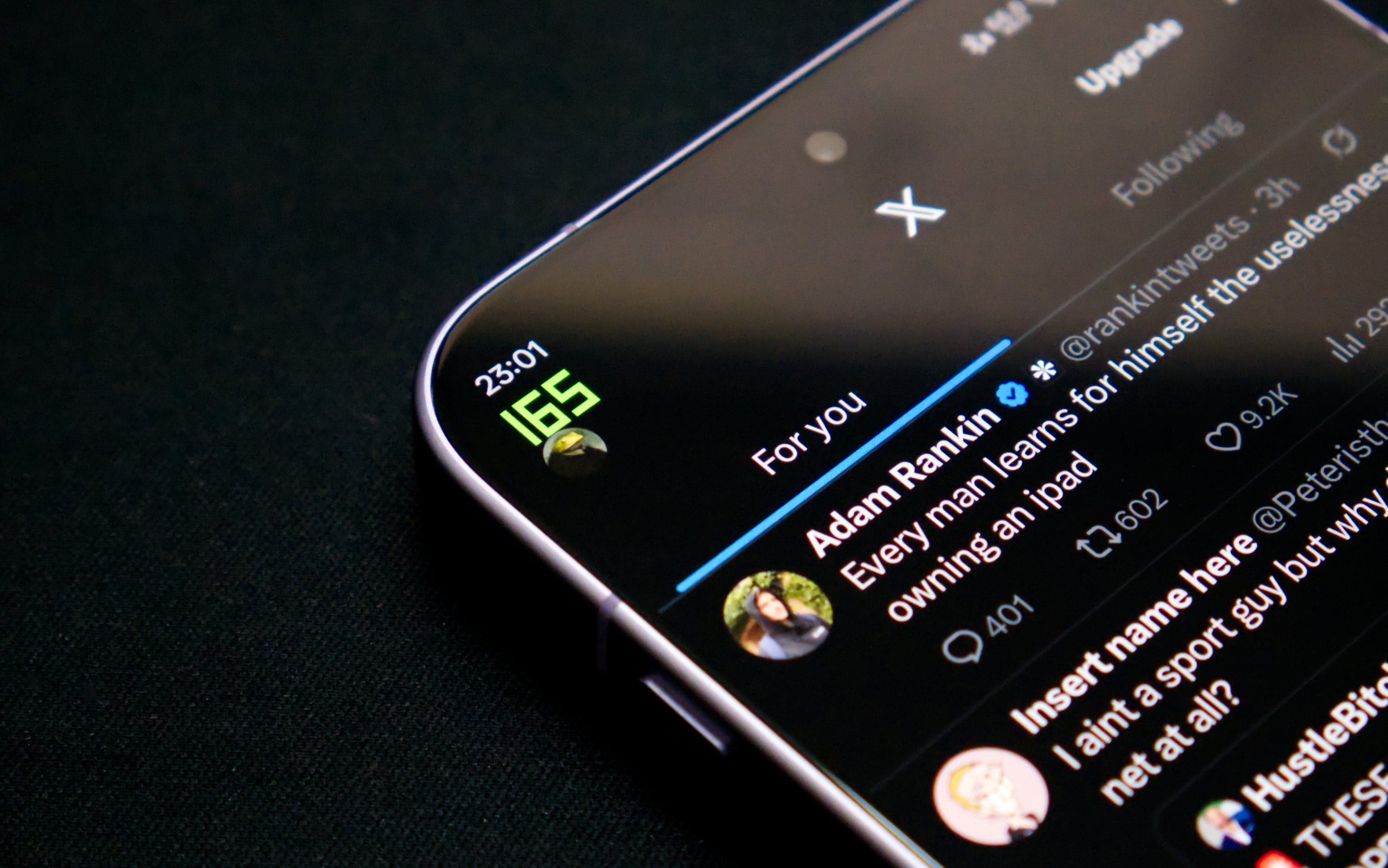
OnePlus 15's 165Hz Update: A Game-Changer for Social Media, Or Just Marketing Hype?
The Verdict: While enabling 165Hz on popular social media apps like WhatsApp, Instagram, and X is a technical achievement for the OnePlus 15, our analysis suggests the real-world user benefit might be marginal for most, raising questions about practical necessity versus spec-sheet bragging rights.
- The OnePlus 15 now supports a full 165Hz refresh rate for WhatsApp, Instagram, and X (formerly Twitter) with software version 16.0.1.305.
- This update extends high refresh rate capabilities beyond gaming, impacting daily social media consumption.
- While technically impressive, we question the tangible user experience improvement given the nature of these applications.
- The move highlights an ongoing industry push for higher refresh rates, often without clear justification for non-gaming use cases.
In the ever-escalating arms race of smartphone specifications, the latest news surrounding the OnePlus 15 has certainly caught our attention. We’ve been informed by GSMArena Reviews that a new software update, version 16.0.1.305, is rolling out for the recently launched OnePlus 15, quietly enabling its impressive 165Hz display capabilities for three of the most widely used social media applications: WhatsApp, Instagram, and X (formerly Twitter). This development, while seemingly minor on the surface, warrants a deeper critical examination.
For too long, the dazzling speeds of high refresh rate screens have been largely confined to gaming, a domain where every millisecond counts for competitive advantage. The notion of extending such an extreme refresh rate to communication and content browsing apps demands our scrutiny. Is this a genuine step forward in user experience, or merely another instance of manufacturers pushing technical boundaries for marketing leverage?
OnePlus 15 165Hz: The Pros, Cons, and Our In-Depth Analysis
Our editorial team has always approached such updates with a healthy dose of skepticism. While the idea of a buttery-smooth scrolling experience across all applications is appealing, the practical implications and genuine benefits for the average user often get lost in the marketing jargon. Let's dissect what this means for the OnePlus 15 and its users.
✅ Pros & ❌ Cons
| ✅ Pros | ❌ Cons |
| Enhanced visual fluidity for scrolling and animations in supported apps, potentially reducing motion blur. The OnePlus 15 165Hz refresh rate benefits for social media users who spend hours scrolling through feeds. This contributes to a theoretically smoother user interface experience. Maximizes the potential of the hardware, ensuring the display is utilized to its full capacity beyond just gaming scenarios. May offer a subtle psychological advantage, making the phone *feel* faster and more premium. Extends the high refresh rate appeal to a broader segment of users who prioritize social media over intensive gaming. | Significantly higher power consumption, leading to reduced battery life for the OnePlus 15, especially for heavy social media users. The human eye's ability to discern differences beyond 90Hz or 120Hz for typical social media scrolling is debatable; is 165Hz necessary for Instagram on OnePlus 15? Minimal perceived difference for most users in static content or infrequent interactions. Potential for increased heat generation during prolonged use at peak refresh rates. Apps like WhatsApp and Instagram are not inherently designed to leverage such high refresh rates, meaning the benefits are limited to scrolling and interface transitions rather than content itself. This pushes manufacturers towards unnecessary hardware capabilities that inflate costs. |
OnePlus 15 165Hz Refresh Rate: Context and Evolution
The journey of high refresh rate displays in smartphones has been a fascinating one, marked by rapid advancements and often, incremental real-world benefits. What started as a niche feature for dedicated gaming phones has steadily trickled down into mainstream flagships. OnePlus has been a key player in this evolution, consistently pushing for smoother displays. We’ve seen them move from 90Hz to 120Hz, and now, with the OnePlus 15, to a staggering 165Hz.
Historically, the primary justification for these high refresh rates was gaming. In titles where reaction time is critical, the ability to display more frames per second translates directly into a more responsive and immersive experience. However, the application of such extreme refresh rates to everyday apps like WhatsApp, Instagram, and X represents a different paradigm. These applications are predominantly driven by scrolling text, images, and short videos, none of which inherently demand 165 frames per second to render effectively.
From our perspective, while the hardware certainly supports it, the software ecosystem for social media has not evolved to truly capitalize on such rapid refresh cycles. We believe this move by OnePlus is more about future-proofing and asserting technological leadership than delivering a immediately transformative user experience. The market is increasingly saturated with high-performance devices, as evidenced by the intense competition highlighted in NexaSpecs' Top 10 Trending Phones: Poco F8 Ultra Dethrones OnePlus 15 in Week 48, making every specification point a battleground.
Critical Analysis: The 165Hz Conundrum for Social Media
Our analysis shows that while the technical capability of the OnePlus 15 to hit 165Hz across these applications is undeniably impressive, the practical impact on user experience warrants scrutiny. The human eye, particularly for casual scrolling and content consumption, has a diminishing return on perceived smoothness beyond a certain threshold. Many users struggle to differentiate between 90Hz and 120Hz in real-world scenarios, let alone the leap from 120Hz to 165Hz for Instagram or X.
This raises fundamental questions: is 165Hz necessary for Instagram on OnePlus 15? We contend that for most users, the answer is likely no. Instagram's feed is a series of static images and short videos, and while scrolling between them might feel marginally smoother, the core interaction isn't one that benefits dramatically from such an extreme refresh rate. The same applies to X (formerly Twitter) and WhatsApp, where text and image loading, rather than ultra-smooth transitions, dictate much of the perceived responsiveness.
Furthermore, such high refresh rates come at a cost, primarily to battery life. Pushing the display to render 165 frames every second, even for relatively simple UI elements, demands more power from the device's battery and processing unit. While modern smartphones like the OnePlus 15 are equipped with advanced power management, consistently running at peak refresh rates for casual apps will inevitably reduce screen-on time. This is a trade-off we believe many users would rather avoid, preferring an extra hour of usage over an imperceptible boost in scrolling fluidity.
We've observed a similar trend with other high-end devices, such as the powerful Poco F8 Pro & Ultra with their Snapdragon 8 Gen 5 power, where raw performance often outstrips the practical needs of most applications. The OnePlus 15's update feels like another step in this direction – a feature for the spec sheet, less so for a genuinely transformative daily experience. It's a testament to engineering capability, but perhaps not a direct answer to a user-centric problem.
The Bigger Picture: Industry Trends and Consumer Expectations
This update from OnePlus is indicative of a broader industry trend where manufacturers are constantly seeking new benchmarks to differentiate their products. In a market where flagship phones often share similar processors, camera capabilities, and industrial designs, the display refresh rate has become a key battleground. However, we must critically evaluate whether these escalating numbers translate into meaningful improvements for the end-user.
The push for higher refresh rates is also influenced by the gaming industry, where monitors with 240Hz, 360Hz, and even higher are becoming commonplace. This trickles down to mobile, creating an expectation that 'more is always better.' Yet, the constraints of a mobile form factor – particularly battery life and thermal management – mean that directly porting desktop-grade refresh rates without significant compromises is challenging.
We believe that while innovation is crucial, there needs to be a greater emphasis on *smart* innovation. Adaptive refresh rate technologies, which dynamically adjust the refresh rate based on content, are a far more pragmatic approach to balancing performance and battery efficiency. While the OnePlus 15 likely employs some form of adaptive refresh, forcing 165Hz for static social feeds seems counterintuitive to optimal power management.
What This Means for You
For current OnePlus 15 owners, this update provides access to the highest refresh rate your device is capable of across more of your daily applications. If you are extremely sensitive to motion smoothness and find even 120Hz to be insufficient, you might notice a subtle improvement, especially during rapid scrolling.
However, for the vast majority of users, we predict the difference will be negligible, if not entirely imperceptible. The primary impact for many will likely be a slight reduction in battery life. We recommend observing your battery performance after the update and deciding if the perceived smoothness is worth the potential trade-off in endurance.
As industry critics, we urge consumers to look beyond raw numbers and consider how features truly enhance their daily interactions. While the OnePlus 15 is a powerful device, capable of delivering cutting-edge performance, the 165Hz update for social media apps exemplifies a trend where technical prowess can sometimes outpace genuine user need.
Frequently Asked Questions
Analysis and commentary by the NexaSpecs Editorial Team.
What are your thoughts on extreme refresh rates for social media apps? Do you notice a significant difference, or do you think it's overkill? Let us know in the comments below!
Interested in OnePlus 15?
Check Price on Amazon →NexaSpecs is an Amazon Associate and earns from qualifying purchases.
📝 Article Summary:
The OnePlus 15 receives an update enabling a 165Hz refresh rate for WhatsApp, Instagram, and X, extending high refresh capabilities beyond gaming. We critically analyze whether this spec bump truly enhances the user experience or primarily serves as a marketing differentiator.
Keywords:
Words by Chenit Abdel Baset