

SpaceX's Starlink Constellation: A Deep Dive into LEO Satellite Internet's Mechanics and Global Impact
The Verdict: SpaceX's continuous deployment of Starlink satellites is rapidly transforming global internet accessibility, leveraging advanced low Earth orbit technology to deliver high-speed, low-latency broadband to even the most remote corners of the world, though not without its challenges.
- Starlink utilizes a vast constellation of satellites in Low Earth Orbit (LEO), significantly reducing latency compared to traditional geostationary satellite internet providers.
- The system relies on sophisticated phased-array antennas, inter-satellite laser links, and a network of ground stations to provide seamless, high-speed connectivity globally.
- While Starlink offers unparalleled access to underserved regions, it faces ongoing challenges related to space debris, light pollution, and intense competition in the rapidly evolving satellite internet market.
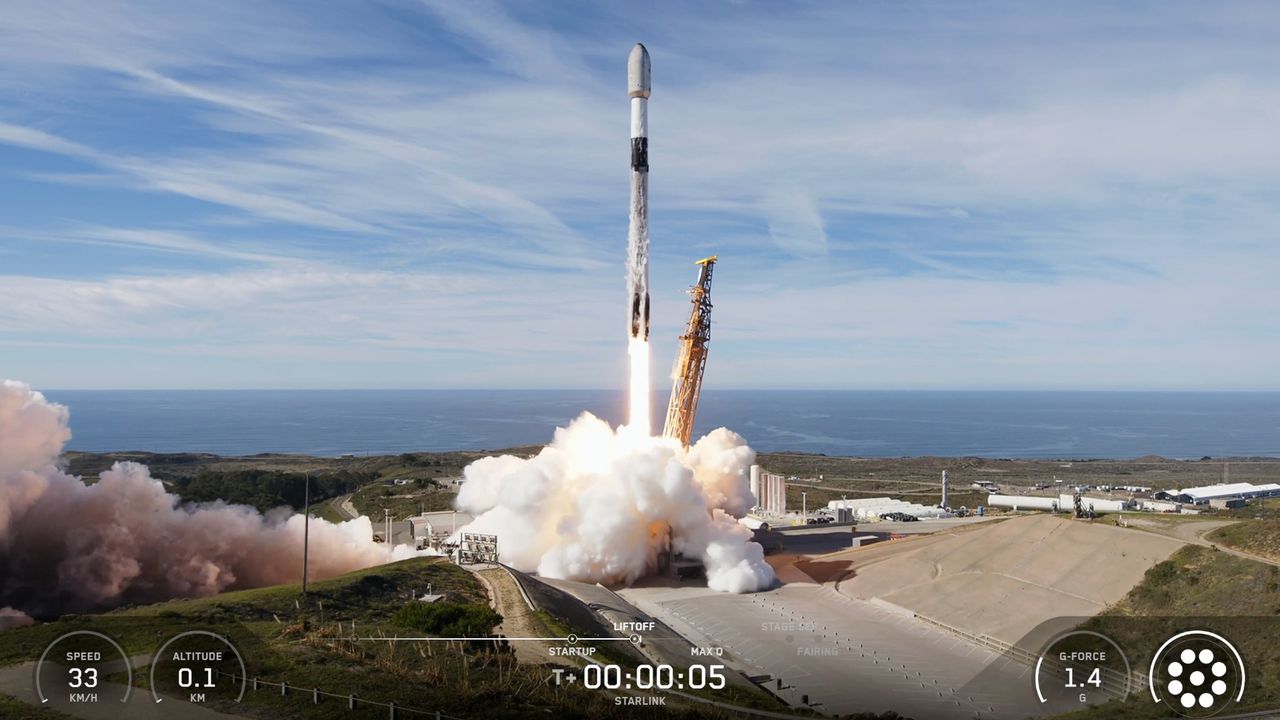
The latest news from Space.com highlights another significant milestone for SpaceX: the launch of 28 more Starlink internet satellites from California’s central coast on Thursday, December 4th. This continuous deployment is not merely a routine operation; it represents a relentless push to expand a global network that is fundamentally reshaping how we perceive and access the internet. From our perspective as Professors of Technology, this ongoing expansion underscores a critical juncture in telecommunications history.
We believe that understanding the mechanics and historical context behind such endeavors is crucial to appreciating their transformative potential. Starlink is more than just an internet service; it's a complex dance of orbital mechanics, cutting-edge RF engineering, and ambitious infrastructure development designed to bridge the digital divide for millions.
The Mechanics of Starlink's Low Earth Orbit Constellation
At the heart of Starlink’s innovation lies its strategic use of Low Earth Orbit (LEO). Unlike traditional satellite internet services, which rely on a few large satellites in geostationary orbit (GEO) at an altitude of approximately 35,786 km, Starlink’s satellites operate much closer to Earth, at about 550 km. This significantly reduced distance is the primary reason for Starlink's remarkably low latency, often comparable to ground-based fiber networks, around 20-40 milliseconds.
Each Starlink satellite is a marvel of engineering, featuring a compact, flat-panel design optimized for dense launch stacking aboard SpaceX's Falcon 9 rockets. These satellites, weighing around 260-306 kg (573-675 lbs) depending on the version, are equipped with five advanced Ku-band phased array antennas and three dual-band (Ka-band and E-band) antennas for high-bandwidth connectivity.
Perhaps one of the most significant technological advancements within the Starlink network is the implementation of inter-satellite laser links, also known as Optical Intersatellite Links (OISLs). These lasers allow satellites to communicate directly with each other in space, creating a mesh network that reduces reliance on ground stations for long-distance data transmission. This capability is particularly vital for providing service over oceans and remote polar regions where ground stations are scarce.
The ground segment of the Starlink network comprises user terminals (often called "Dishy") and ground stations, or gateways. User terminals are equipped with sophisticated electronic phased array antennas that can electronically steer beams to track fast-moving LEO satellites without physical movement. This dynamic tracking allows for seamless switching between satellites as they pass overhead, minimizing service interruptions. Ground stations, strategically located globally, serve as crucial links, connecting the orbiting constellation to the terrestrial internet backbone via high-speed fiber optic cables. They relay data between the satellites and the wider internet, and also send commands to the satellites for operation and alignment.
A Brief History of Satellite Internet and Starlink's Genesis
The concept of satellite communication dates back to the mid-20th century, with Arthur C. Clarke famously proposing geostationary orbits for global communication relays in 1945. The launch of Sputnik 1 in 1957 by the Soviet Union marked the beginning of the space age and demonstrated the feasibility of placing objects in Earth's orbit. Telstar 1, launched in 1962, revolutionized transatlantic communication by transmitting television signals and telephone calls.
Early attempts at satellite internet in the 1990s and early 2000s, such as Iridium and Teledesic, faced challenges including high costs and limited bandwidth, often relying on geostationary satellites that introduced significant latency. However, these efforts laid important groundwork. The first successful commercial broadband satellite internet service emerged around 2003 with Eutelsat's e-BIRD satellite.
SpaceX officially announced its Starlink project in 2015, with the ambitious goal of providing high-speed, low-latency internet globally. The first two test satellites were launched in 2018, followed by the first batch of 60 operational Starlink satellites in May 2019. Since then, deployment has been rapid, with the constellation growing to over 7,600 satellites by May 2025, comprising 65% of all active satellites. This aggressive launch schedule, facilitated by SpaceX's reusable Falcon 9 rockets, has been instrumental in Starlink's swift expansion, distinguishing it from earlier, less successful ventures.
Starlink's Innovation: Pros & Cons
Our analysis shows that Starlink represents a significant leap forward in internet connectivity, particularly for those in underserved regions. However, like any burgeoning technology, it comes with its own set of trade-offs.
| ✅ Pros | ❌ Cons |
| High-speed, low-latency internet in rural and remote areas where traditional broadband is unavailable or unreliable. Global coverage, including oceans and polar regions, thanks to LEO constellation and inter-satellite laser links. Relatively easy self-installation of user terminals. Supports demanding applications like streaming, online gaming, and video conferencing. Enhanced mobility with services for vehicles, boats, and aircraft. Resilient network architecture with multi-path routing. | Concerns about space debris and orbital congestion, posing risks to other satellites. Significant light pollution impacting ground-based and space-based astronomy. Higher upfront equipment costs and monthly subscription fees compared to some traditional broadband options. Potential for signal degradation during heavy weather conditions. Relatively new technology, with ongoing development and potential for service changes. |
The Broader Impact of LEO Satellite Internet
The implications of Starlink and similar LEO constellations extend far beyond mere internet access. We believe this technology is a powerful tool in bridging the global digital divide, offering connectivity to communities previously isolated by geography or lack of infrastructure. This newfound access can unlock educational opportunities, stimulate local economies, and facilitate critical communication in emergencies.
However, this rapid proliferation of satellites in LEO also brings significant challenges. The sheer number of Starlink satellites, already over 7,600 and planned to increase to nearly 12,000 with a possible extension to 34,400, raises serious concerns about space debris. A single collision could trigger a cascading effect, known as the Kessler syndrome, rendering certain orbits unusable.
Astronomers worldwide have voiced alarm over the light pollution caused by these megaconstellations. The bright reflections from satellites interfere with ground-based astronomical observations, and even space telescopes like the Hubble Space Telescope are being affected, with predictions of significant image contamination. While SpaceX has attempted mitigation measures, the problem persists and intensifies with each launch.
The competitive landscape is also heating up. Starlink is not alone in the LEO satellite internet race. Companies like OneWeb, Amazon's Project Kuiper, and Telesat Lightspeed are also deploying or planning their own constellations, aiming to capture segments of this lucrative market. This competition, while driving innovation, further exacerbates concerns about orbital crowding.
What This Means for You
From our perspective, the ongoing expansion of Starlink fundamentally alters the internet landscape for individuals and businesses alike. For those in rural or remote areas, Starlink can be a lifeline, offering access to opportunities previously out of reach. Imagine the impact on remote learning, telemedicine, or even streaming high-definition content, much like the advancements we've seen with high-refresh-rate displays in devices such as the OnePlus 15's 165Hz update. The low latency means real-time applications, often hampered by traditional satellite internet, become viable.
For businesses, particularly those operating in geographically challenging locations, Starlink offers robust and reliable connectivity that can support data-intensive operations, cloud services, and remote workforces. This widespread internet availability also influences the broader tech ecosystem, impacting everything from the development of advanced smartwatches, as discussed in our piece on Google Pixel Watch Gestures, to the global supply chains of devices like the OnePlus 15.
However, it also means a greater collective responsibility to address the environmental and astronomical concerns associated with these megaconstellations. The decisions made today regarding orbital regulations and satellite design will have lasting impacts on our ability to observe the cosmos and ensure the long-term sustainability of space. Our analysis shows that a balanced approach, fostering innovation while rigorously addressing its externalities, is paramount.
Frequently Asked Questions
Analysis and commentary by the NexaSpecs Editorial Team.
What are your thoughts on the rapid expansion of satellite internet constellations like Starlink? Do the benefits of global connectivity outweigh the environmental and astronomical concerns? Let us know in the comments!
Interested in Starlink?
Check Price on Amazon →NexaSpecs is an Amazon Associate and earns from qualifying purchases.
📝 Article Summary:
SpaceX continues to expand its Starlink constellation, launching 28 more satellites to bolster its global high-speed, low-latency internet service. This article delves into the intricate mechanics of Starlink's Low Earth Orbit (LEO) technology, its historical context, and the profound implications for global connectivity and space sustainability.
Keywords:
Words by Chenit Abdel Baset