

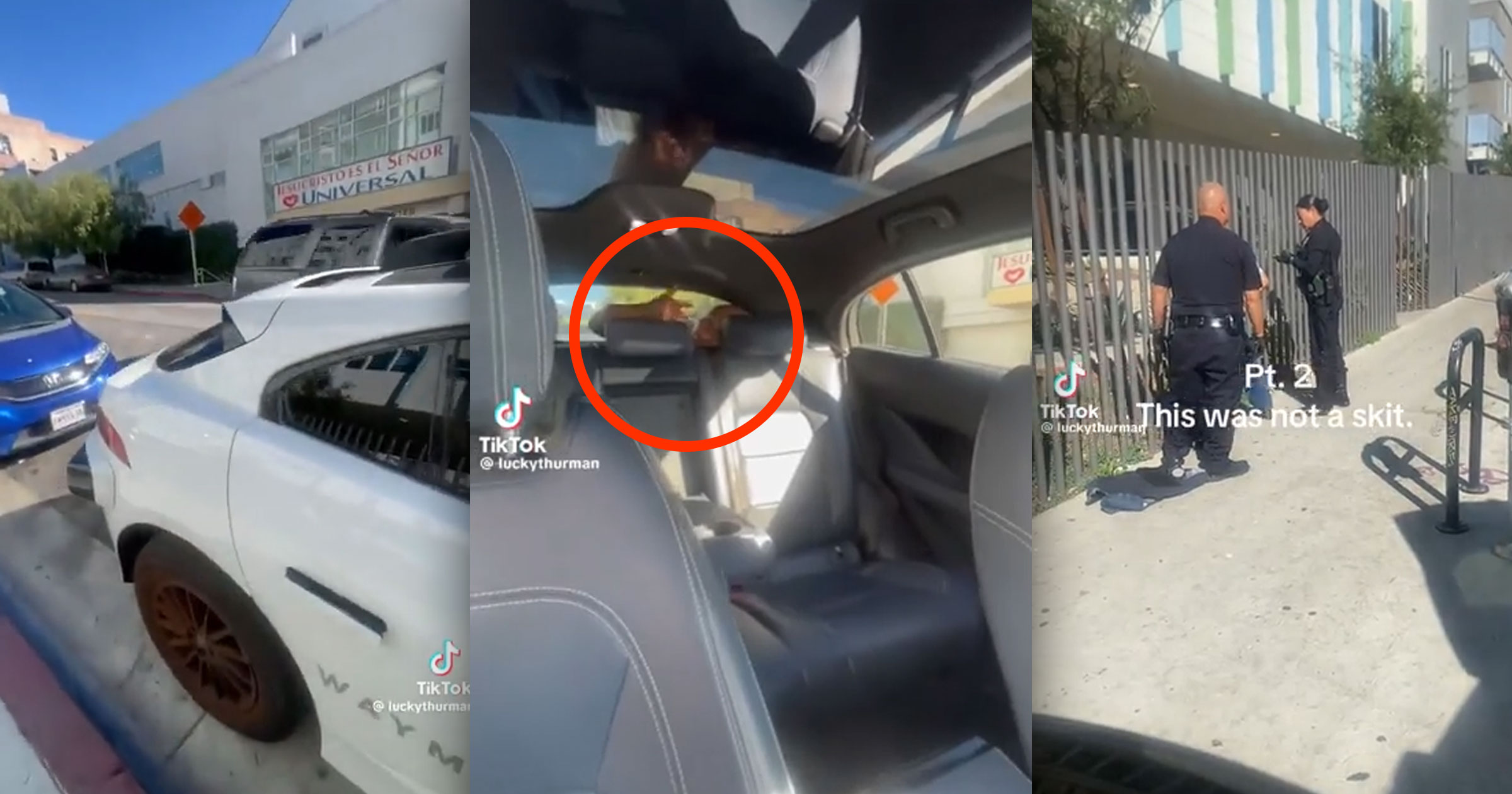
Uninvited Passenger: Waymo Incident Raises New Questions on Autonomous Vehicle Security
The burgeoning autonomous ride-hailing industry, heralded for its potential to revolutionize urban mobility, is currently navigating a complex landscape of technological advancement and public scrutiny. While Waymo, a leader in this sector, recently celebrated a unique milestone with a birth occurring in one of its self-driving vehicles, a far more unsettling incident in Los Angeles has cast a spotlight on critical security vulnerabilities and the evolving challenges of driverless operations.
Industry Impact
The recent discovery of an unauthorized individual in the trunk of a Waymo vehicle in Los Angeles has ignited fresh debates regarding the security protocols and sensor capabilities of autonomous ride-hailing services. This incident, captured in a viral video, saw a woman hailing a Waymo for her daughter only to find a man already occupying the trunk space. The man claimed he was trapped and that "the people" had put him there, though police later determined no crime had occurred. Waymo acknowledged the incident, stating that a pedestrian had entered the trunk after a previous rider left it open, and committed to implementing changes to address this "unacceptable" experience.
Safety and Security Concerns in an Expanding Fleet
This event comes amidst a period of rapid expansion and increased scrutiny for Waymo and the broader autonomous vehicle (AV) industry. Waymo has been actively deploying its services in major U.S. cities, including San Francisco, Los Angeles, Phoenix, Austin, and Atlanta, with plans to extend to nearly two dozen more, such as Philadelphia, Dallas, and Miami. However, this growth has been accompanied by a series of high-profile incidents that challenge public perception and regulatory confidence.
Beyond the trunk incident, Waymo is currently undertaking a voluntary recall of over 3,000 vehicles due to a software flaw that caused them to illegally pass stopped school buses with flashing red lights and extended stop arms. This issue has been documented in multiple instances, with 20 reported in Austin and six in Atlanta, prompting an investigation by the National Highway Traffic Safety Administration (NHTSA). While Waymo states it identified and updated the software by November 17, incidents continued to be reported. Other notable events include Waymo vehicles striking and killing a cat and a dog in San Francisco, leading to significant public discontent. The company has also faced vandalism and protests in cities like Los Angeles and San Francisco, highlighting a segment of the public that views these driverless cars with skepticism or outright opposition.
Waymo emphasizes its robust safety framework, which includes a comprehensive sensor suite of LiDAR, cameras, and radar providing a 360-degree view, alongside an AI compute platform. Interior cameras monitor passenger behavior and seatbelt usage, and a remote Rider Support team can detect "unusual activity" and intervene by contacting passengers or emergency services. The company also implements "Safe Exit" features, providing audio and visual alerts to riders about approaching road users when a door is opened. Waymo asserts that its vehicles are designed to perform a "minimal risk condition" or safe stop if they encounter situations where they cannot proceed safely. Furthermore, Waymo claims its self-driving cars have significantly reduced crash rates compared to human drivers, reporting 91% fewer serious-injury-or-worse crashes and 80% fewer crashes causing any injury over nearly 100 million driverless miles by mid-2025.
Public Trust and Market Adoption
Despite Waymo's reported safety statistics, the accumulation of such incidents, particularly those involving unexpected human interaction or software malfunctions, poses a significant challenge to consumer trust. A 2025 survey indicated that 6 in 10 U.S. drivers remain hesitant to ride in a self-driving vehicle, and overall enthusiasm for the technology has seen a decline. The autonomous vehicle market is projected to reach $62 billion by 2025, with Level 2 and Level 3 autonomous vehicles expected to dominate new car sales. However, widespread adoption of higher levels of autonomy (Level 4 and 5, which Waymo operates) hinges on effectively addressing safety concerns, building consumer confidence, and establishing a robust regulatory framework. Cybersecurity, in particular, remains a critical challenge, as autonomous systems present a new "attack surface" where vulnerabilities could lead to severe physical safety risks.
| Key Highlights Summary | Details |
|---|---|
| Trunk Incident Location | Los Angeles |
| Waymo Response to Trunk Incident | "Unacceptable," implementing changes |
| School Bus Recall | 3,067 vehicles due to software issue |
| NHTSA Investigation | Ongoing since October for school bus incidents |
| Waymo Safety Claims | 91% fewer serious injury crashes, 92% fewer pedestrian injury crashes vs. human drivers |
| Public Perception (2025) | 6 in 10 U.S. drivers afraid to ride in self-driving vehicles |
| Waymo Expansion | Operating in San Francisco, LA, Phoenix, Austin, Atlanta; expanding to new cities and freeways |
Expert Verdict
The recent Waymo incidents, from the unsettling discovery in a vehicle's trunk to recurring software issues with school buses, underscore the complex and multifaceted challenges facing the autonomous vehicle industry. While Waymo's data suggests a strong safety record in terms of accident reduction compared to human drivers, these highly visible and unusual events erode public trust and highlight the need for continuous, rigorous improvement in both software intelligence and physical security. The industry's rapid expansion must be meticulously balanced with robust safety protocols and transparent communication to foster the widespread acceptance crucial for the future of autonomous mobility. Addressing these "edge cases" and ensuring comprehensive security measures will be paramount for autonomous ride-hailing services to truly earn the confidence of consumers and regulators alike.