

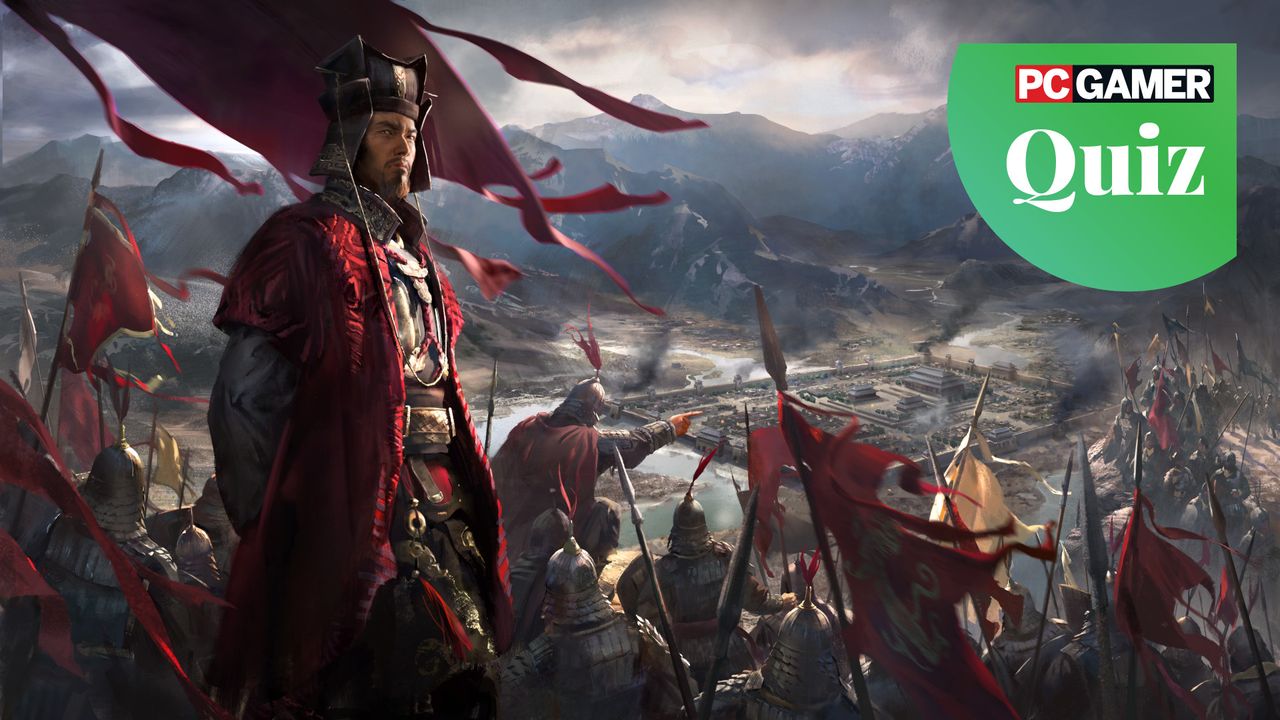
Total War’s Technical Evolution: A 25-Year Journey of Grand Strategy and Engine Innovation
The Verdict: Creative Assembly’s Total War series stands as a monument to evolving strategy game engines, consistently pushing the boundaries of scale and ambition, even while grappling with the inherent technical challenges of managing vast, real-time battles.
✅ Pros & ❌ Cons
| ✅ Pros | ❌ Cons |
|
|
As we recently learned from PC Gamer, Creative Assembly is celebrating a quarter-century since the launch of the original Shogun: Total War, a landmark event in the evolution of strategy games. This anniversary isn't just a look back at an iconic quiz, but a profound moment to reflect on the Total War series' technical evolution and its impact on the gaming landscape.
From our perspective, the journey of this strategy game engine, meticulously crafted by Creative Assembly, has been nothing short of fascinating. It’s a narrative of continuous ambition, pushing the boundaries of what a real-time strategy game could achieve on a personal computer. The recent announcement of Total War: Medieval 3, powered by a brand-new engine called 'Warcore,' signifies a pivotal moment for the series, promising a "rebirth of historical Total War."
The Technical Evolution of Total War's Engine: A Quarter-Century of Innovation
The technical evolution of the Total War series is a testament to Creative Assembly’s persistent drive for innovation. Starting with Shogun: Total War in 2000, the series quickly established its unique blend of turn-based grand strategy and real-time tactical battles.
This dual gameplay loop necessitated a robust and adaptable strategy game engine, capable of rendering vast campaign maps and thousands of individual units simultaneously. The shift from earlier engines to the widely utilized Warscape engine, which debuted with Empire: Total War, marked a significant leap forward.
Graphics Quality and Visual Fidelity Across Eras
Graphics quality in Total War titles has always aimed for immersion, reflecting the game's historical or fantastical settings with impressive detail. Early titles used advanced 2D sprites for campaign maps and 3D models for battles, a groundbreaking approach at the time. As technology advanced, the Creative Assembly development team consistently leveraged newer rendering techniques.
We’ve seen the series transition from relatively simplistic models to highly detailed units with intricate animations, especially in games like Total War: Rome II and the Total War: Warhammer trilogy. The sheer scale, with thousands of units clashing on screen, demanded constant innovation in visual optimization to maintain a playable frame rate without sacrificing fidelity. Much like the detailed environments discussed in our analysis of Baldur's Gate 3's graphics and performance, Total War strives for expansive, believable worlds.
Performance, Optimization, and the Scale Challenge
The inherent ambition of Total War games — simulating immense battles with complex AI — often presents significant performance challenges. Optimizing a strategy game engine to handle thousands of individual units, each with its own AI, physics, and animations, is a Herculean task. Players have frequently noted that achieving consistently high FPS in the largest battles can be demanding, even on top-tier hardware.
Creative Assembly has continually refined their engine to mitigate these issues, but the commitment to grand scale means that performance optimization remains a critical, ongoing aspect of their development. The introduction of DirectX 12 support and Havok Physics in the upcoming Warcore engine aims to tackle these head-on, promising improved visuals and dynamically destructible environments.
System Requirements Through the Ages: A Demanding Evolution
Naturally, with each iteration pushing graphical and simulation boundaries, the system requirements for Total War games have steadily climbed. What ran smoothly on a mid-range PC a decade ago might struggle with the latest release. This is a common trajectory for technically ambitious titles, where the cutting edge demands cutting-edge hardware.
From our perspective, the series has always been a benchmark for PC performance, often serving as a stress test for new CPUs and GPUs. The new Warcore engine, while promising efficiency, will undoubtedly continue this tradition, albeit with the added benefit of future console compatibility.
Critical Analysis: Creative Assembly's Development Philosophy and Strategy Game Engine Innovation
Creative Assembly's development philosophy has consistently revolved around delivering an unparalleled sense of scale and strategic depth. We believe their dedication to evolving their proprietary strategy game engine is central to this mission. The Warscape engine, despite its longevity and some acknowledged quirks, has allowed for incredible diversity in settings, from ancient Rome to feudal Japan and the fantastical realms of Warhammer.
The announcement of Warcore, a completely new engine, is a clear signal that Creative Assembly is not resting on its laurels. This significant investment in a new technological foundation demonstrates a long-term vision, aiming to create more immersive, dynamic, and responsive gameplay experiences. It also addresses concerns about the aging Warscape engine, which some developers found increasingly difficult to work with for new content.
What This Means for You: The Enduring Legacy of Total War's Technical Prowess
For players, the 25-year history of Total War translates into a rich mix of strategic experiences, each building upon the last in terms of technical sophistication. The ongoing commitment to innovation, epitomized by the new Warcore engine, suggests an exciting future for the series. We anticipate more fluid battles, enhanced visual effects, and potentially new gameplay mechanics that leverage destructible environments and improved AI.
The prospect of Total War titles coming to consoles, a first for the franchise with the Warcore engine, also means a broader audience can experience these grand strategy epics. Our analysis shows that this expansion, alongside continued PC development, positions Creative Assembly at the forefront of strategy game engine development for years to come.
What are your fondest memories of the Total War series' technical advancements, and what are you most excited to see from the new Warcore engine? Let us know in the comments!
Analysis and commentary by the NexaSpecs Editorial Team.
📝 Article Summary:
Total War’s Technical Evolution: A 25-Year Journey of Grand Strategy and Engine Innovation The Verdict: Creative Assembly’s Total War series stands as a monument to evolving strategy game engines, consistently pushing the boundaries of scale and ambition, even while grappling with the inh...
Keywords:
Words by Chenit Abdel Baset