

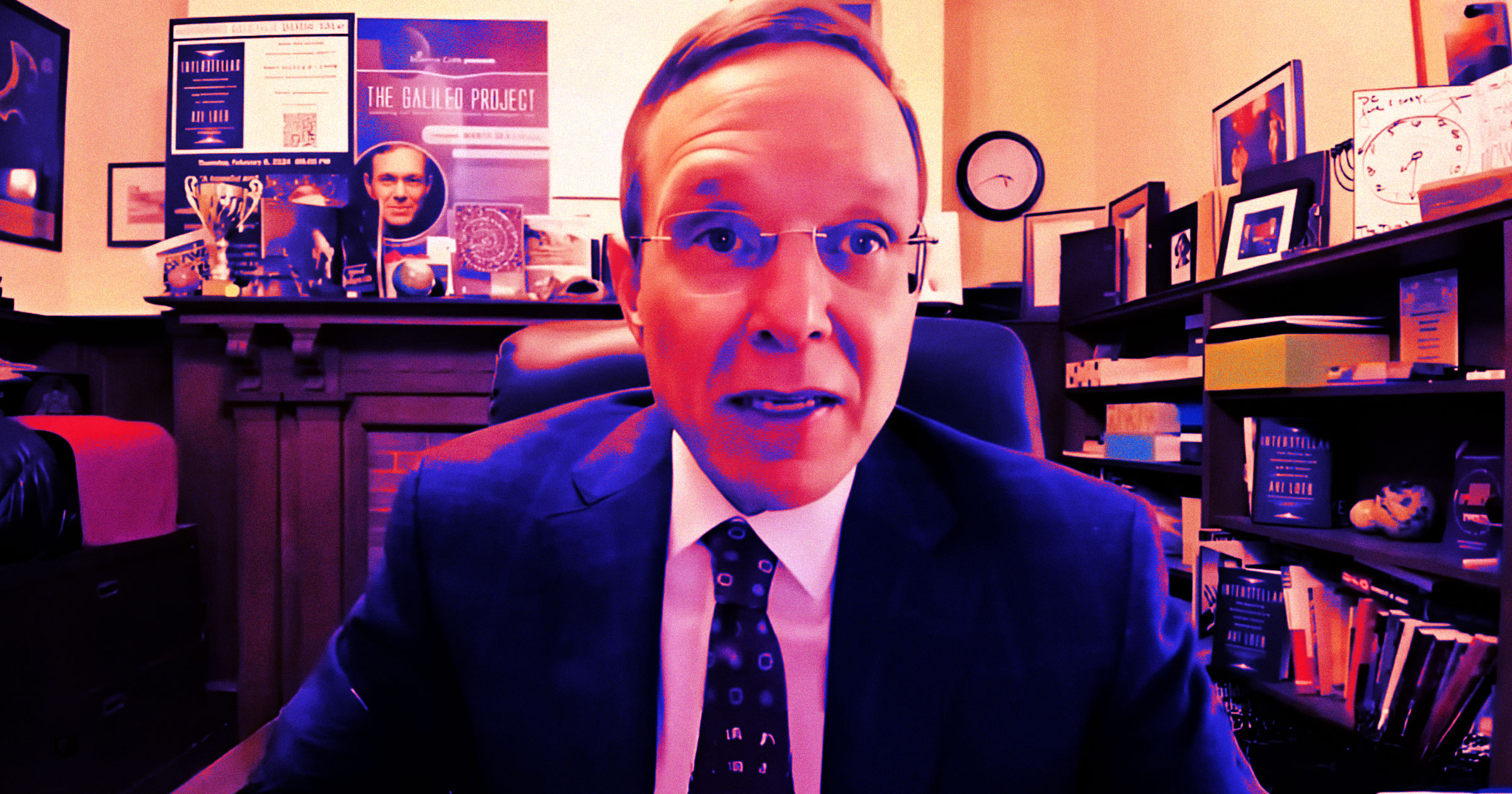
The Digital Doppelgänger Debacle: Unmasking the Avi Loeb AI Deepfake Scam
Ah, generative AI. The supposed harbinger of a new era of innovation. Or, as our analysis shows, a glorified, easily weaponized tool for scammers and misinformation peddlers. We believe the latest farce to grace our digital screens — an AI deepfake of renowned Harvard astronomer Avi Loeb peddling sensational nonsense on YouTube — perfectly encapsulates this grim reality. Futurism first brought this brazen act of digital impersonation to our attention, detailing how a rogue channel is leveraging AI to clone Loeb's likeness and voice.
From our perspective, this isn't merely a technological blip; it's a stark indictment of platform complacency and the alarming ease with which trust can be eroded in our increasingly synthetic digital landscape. We’re witnessing the cynical weaponization of 'advances' that were, we're told, meant to improve our lives. Instead, they're just making it easier to lie, cheat, and steal online.
- A sophisticated AI deepfake of Harvard's Avi Loeb is circulating on YouTube, spreading '3I/ATLAS misinformation' and impersonating the scientist for profit.
- YouTube has been notably slow and unresponsive in addressing the 'YouTube impersonation scam,' despite multiple reports, highlighting a significant failure in content moderation policies.
The Blatant AI Impersonation of Avi Loeb: A YouTube Impersonation Scam Unchecked
The concept of digital impersonation is hardly new. From phishing emails promising Nigerian fortunes to rudimentary Photoshopped images, the internet has always been a playground for deception. However, the advent of sophisticated generative AI has elevated this game to an entirely new, and frankly, disturbing level. We're no longer talking about crude fakes; we're dealing with uncanny valley manifestations that can convincingly replicate human appearance and speech.
This escalating threat has found a new victim in Avi Loeb, a figure who, despite his contentious theories regarding interstellar object 3I/ATLAS possibly being an alien spacecraft, has undeniably captured significant public interest. His very public profile makes him a prime target for those looking to capitalize on curiosity, regardless of the ethical implications. The YouTube channel, audaciously named "Dr. Avi Loeb," is a masterclass in digital duplicity, allegedly utilizing AI to clone both his visual likeness and his distinct voice.
Our analysis of the situation, building on reports, reveals that this isn't just about mimicry; it's about weaponizing credibility. Loeb’s original stance, while speculative, always maintained a scientific nuance, acknowledging natural origins as a possibility for 3I/ATLAS. The AI-generated videos, however, ditch any pretense of academic rigor, opting for clickbait titles such as "3I/ATLAS Is a PROBE — New Data Leaves No Doubt." This sensationalism is a clear indicator of the channel's true intent: to exploit public fascination for views and, ultimately, profit.
We've witnessed similar exploitations of emerging technologies, such as when 'smart' browsers like Perplexity Comet exposed AI agent data loss catastrophes. This Loeb deepfake is another grim reminder that innovation often outpaces ethical safeguards and platform accountability. The technical 'tells' of the deepfake—jerky movements and a frozen clock in the background—are minor imperfections that dedicated viewers might spot, but in the attention-scarce online environment, they're often overlooked.
Loeb's Outcry and YouTube's Inaction: 3I/ATLAS Misinformation Goes Viral
Avi Loeb himself has confirmed the fraudulent nature of these videos, stating unequivocally in an email to Futurism, "Indeed, these videos are fake, produced by AI." He took the entirely reasonable step of reporting this egregious YouTube impersonation scam to the platform. Yet, despite his efforts and the reports filed by his extensive fanbase, YouTube, in its typical fashion, has dragged its digital feet. Our editorial team finds this lack of swift action utterly baffling, if not entirely predictable.
Loeb's concern extends beyond personal affront. He articulates a profound anxiety about the broader implications: "Imagine creating videos that feature avatars of scientists that look like them and speak in their voice, but spread counterfactual information about 3I/ATLAS... How would the public know who to believe?" This isn't theoretical; it's the precise dilemma we face with this AI deepfake.
YouTube's own impersonation policy explicitly forbids "content intended to impersonate a person or channel," threatening termination for violations. Yet, this channel, created in September and actively impersonating Loeb since November 24th, has amassed over 1.4 million views. The potential earnings, estimated between $14,000 and $42,000, provide a clear incentive for such malfeasance. This financial motive, coupled with the potential for spreading deliberate 3I/ATLAS misinformation, paints a grim picture of platform irresponsibility.
✅ Pros & ❌ Cons of AI Content Generation (for Scammers, obviously)
| ✅ Pros (for Malicious Actors) | ❌ Cons (for Everyone Else) |
|
|
The Real Risks: Misinformation, Monetization, and the Erosion of Trust
The implications of this incident stretch far beyond one Harvard astronomer. We are, as Loeb himself pointed out, living in a "new reality where fake content can be easily generated by AI." This isn't just a nuisance; it's an existential threat to the very notion of verifiable information. When platforms like YouTube fail to act decisively against clear instances of AI deepfake impersonation and 3I/ATLAS misinformation, they become complicit in the erosion of trust.
The monetization aspect is particularly galling. The fact that a channel built on outright deception can potentially rake in tens of thousands of dollars is a perverse incentive structure. It signals to bad actors that the rewards for exploiting AI far outweigh the risks of platform censure. This, we believe, is a catastrophic oversight by companies that claim to prioritize user safety and content integrity.
What This Means for You
For the average internet user, this means heightened vigilance is no longer optional; it's a prerequisite for navigating the digital realm. We must approach every piece of online content, especially those featuring public figures discussing hot topics, with a healthy dose of skepticism. Verify sources, look for official channels, and be wary of anything that seems too sensational or deviates from a known figure's established tone. This isn't just about avoiding a scam; it's about preserving a functional information ecosystem.
The responsibility also falls on us, the tech media, to continually highlight these failures and push for greater accountability from the platforms that host such content. Until there are real consequences for spreading AI-generated falsehoods, and until platforms like YouTube implement truly proactive and effective moderation, we will continue to see a deluge of digital deception.
The Verdict: The Avi Loeb fake on YouTube is a glaring example of how 'transformative' AI is being twisted into a tool for cynical profit and pervasive misinformation, while platforms remain stubbornly inert. We demand better accountability.
Frequently Asked Questions
Analysis and commentary by the NexaSpecs Editorial Team.
What do you think about YouTube's handling of AI deepfakes and impersonation scams? Let us know in the comments below!
📝 Article Summary:
An AI deepfake of Harvard astronomer Avi Loeb is spreading misinformation on YouTube, highlighting the alarming ease with which generative AI can be weaponized for profit and deception. YouTube's slow response to remove the fraudulent content underscores a critical failure in platform moderation and accountability.
Keywords:
Words by Chenit Abdel Baset