

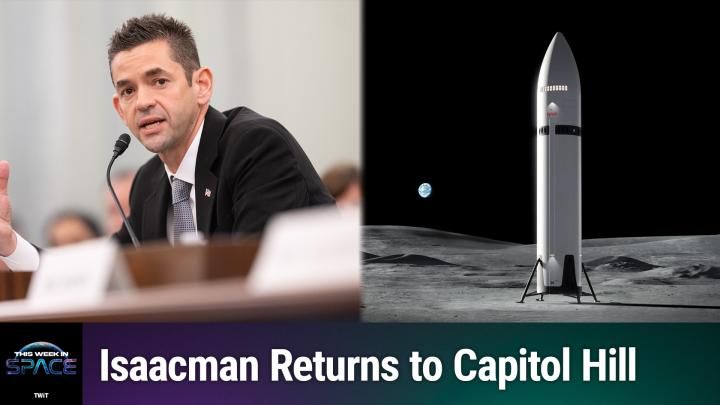
Jared Isaacman: A New Era for NASA Leadership and Commercial Space
The Verdict: Jared Isaacman's confirmation as NASA Administrator signals a profound shift towards commercial innovation and entrepreneurial drive within the venerable space agency.
- Jared Isaacman, a billionaire entrepreneur and private astronaut, has received his second confirmation as NASA's next leader, marking a significant departure from traditional appointments.
- His leadership is expected to infuse NASA with an entrepreneurial spirit, prioritizing efficiency, innovation, and stronger public-private partnerships, especially in the context of the Artemis program.
- This appointment reflects the growing influence and maturation of the commercial space industry, which is increasingly playing a pivotal role in global space exploration and technological advancement.
The cosmos is often perceived as the ultimate frontier of scientific endeavor, a realm traditionally governed by national agencies and monumental government-funded projects. Yet, as Rod Pyle and Tariq Malik discussed on Episode 188 of This Week In Space, we are witnessing a pivotal moment in this history. The second confirmation of Jared Isaacman as NASA’s next leader represents far more than a mere change in administration; it heralds a transformative era where the entrepreneurial spirit of commercial space leadership is set to redefine the agency's trajectory.
This development is not just a news story; it is a seismic shift in the mechanics of space exploration. From our perspective as Professors of Technology, this move signifies an acknowledgment of the dynamic capabilities of the private sector and its potential to accelerate human advancement beyond Earth. We believe Isaacman's unique background offers a fresh, results-oriented approach to NASA’s long-standing missions.
Jared Isaacman: The Maverick Behind NASA's New Direction
A Billionaire's Journey to Commercial Space Leadership
Jared Isaacman is not a typical candidate for such a high-profile governmental role. Born in 1983, he is a billionaire entrepreneur who founded Shift4 Payments, a leading payment processor, at just 16 years old after dropping out of high school. His business acumen is undeniable, but it's his passion for aviation and space that truly sets him apart. He is a skilled pilot, having set a world record for circumnavigating the globe in a light jet.
More notably, Isaacman is a commercial astronaut. He commanded Inspiration4, the first all-civilian orbital spaceflight, in 2021, and later led Polaris Dawn, during which he became the first private citizen to perform a spacewalk. These missions, funded by Isaacman himself, were groundbreaking, pushing the boundaries of what was previously considered the exclusive domain of government-trained professionals.
The Mechanics of a Non-Traditional Appointment
Isaacman's journey to becoming a NASA leader is unprecedented. Historically, NASA administrators have often come from scientific, military, or political backgrounds, with deep ties to governmental processes. Isaacman, however, represents the burgeoning commercial space industry. His nomination by President Donald Trump in December 2024, and subsequent renomination in November 2025, underscores a deliberate pivot towards leveraging private sector efficiency and innovation within NASA.
His confirmation hearings have focused on his vision to instill a "mission-first" culture, emphasizing efficiency and strategic leadership. This approach aims to accelerate programs like Artemis, which seeks to return humans to the Moon, and potentially to Mars, before competitors like China.
Critical Analysis: The Pros and Cons of a Commercial Astronaut as NASA Administrator
✅ Pros & ❌ Cons
| ✅ Pros | ❌ Cons |
|
|
The Bigger Picture: Reshaping NASA for the 21st Century
The appointment of Jared Isaacman signifies a broader trend in the aerospace industry: the accelerating rise of commercial space. The global space economy reached a staggering $613 billion last year and is projected to reach $1.8 trillion within a decade. This growth is fueled by advancements in reusable rockets, satellite networks, and in-space manufacturing – areas where private companies are leading the charge. We've previously explored the revolutionary potential of Varda's In-Space Manufacturing, highlighting how orbital production is becoming routine and revolutionary, a concept that aligns perfectly with Isaacman's commercial-first philosophy.
NASA has historically been the sole driver of American space endeavors, from the Mercury and Apollo programs to the Space Shuttle era. However, the past two decades have seen a gradual but significant shift towards collaboration with the private sector. Companies like SpaceX have become indispensable partners for cargo and crew transport to the International Space Station, and are central to NASA's Artemis program for lunar exploration.
Our analysis shows that Isaacman's leadership could amplify this paradigm shift. His leaked "Project Athena" plan, although a "living document," reportedly emphasizes outsourcing some NASA missions to the private sector and treating the agency more like a business. This includes potentially purchasing scientific data from commercial companies rather than developing all capabilities in-house, a concept he terms "science as a service," particularly concerning Earth observation.
This pragmatic approach could streamline operations and inject much-needed agility into NASA, allowing for faster development cycles similar to those seen in the tech industry. Consider the rapid iterations in smartphone technology, like the Poco F8 Pro & Ultra Debut, driven by intense market competition. Isaacman aims to bring a similar competitive drive to space exploration.
What This Means for You
For the average citizen, a Jared Isaacman-led NASA could translate into a more dynamic and ambitious space program. We might see accelerated timelines for lunar missions, a more robust commercial low-Earth orbit economy, and potentially even faster progress towards human missions to Mars. His emphasis on competition and efficiency suggests that taxpayer dollars might be stretched further, aiming for greater returns on investment.
However, there are also areas that warrant careful observation. His stated desire to "remove NASA from the taxpayer-funded business of climate science and leave that to academia" could lead to a reprioritization of scientific endeavors within the agency. This potential shift raises questions about the future of NASA's vital climate research and Earth observation programs, which have traditionally provided crucial data for understanding our changing planet.
Ultimately, Isaacman's appointment is a bold experiment in leadership, blending government oversight with private sector dynamism. It's a testament to the evolving nature of space exploration, where innovation is no longer solely the purview of national governments but a shared ambition with visionary entrepreneurs.
Analysis and commentary by the NexaSpecs Editorial Team.
What do you think about Jared Isaacman's appointment as NASA Administrator? Will his commercial background revolutionize space exploration, or does it pose new challenges for the agency? Let us know in the comments!
📝 Article Summary:
Jared Isaacman: A New Era for NASA Leadership and Commercial Space The Verdict: Jared Isaacman's confirmation as NASA Administrator signals a profound shift towards commercial innovation and entrepreneurial drive within the venerable space agency. 📌 Key Takeaways Jared Isaacman, a billio...
Words by Chenit Abdel Baset