

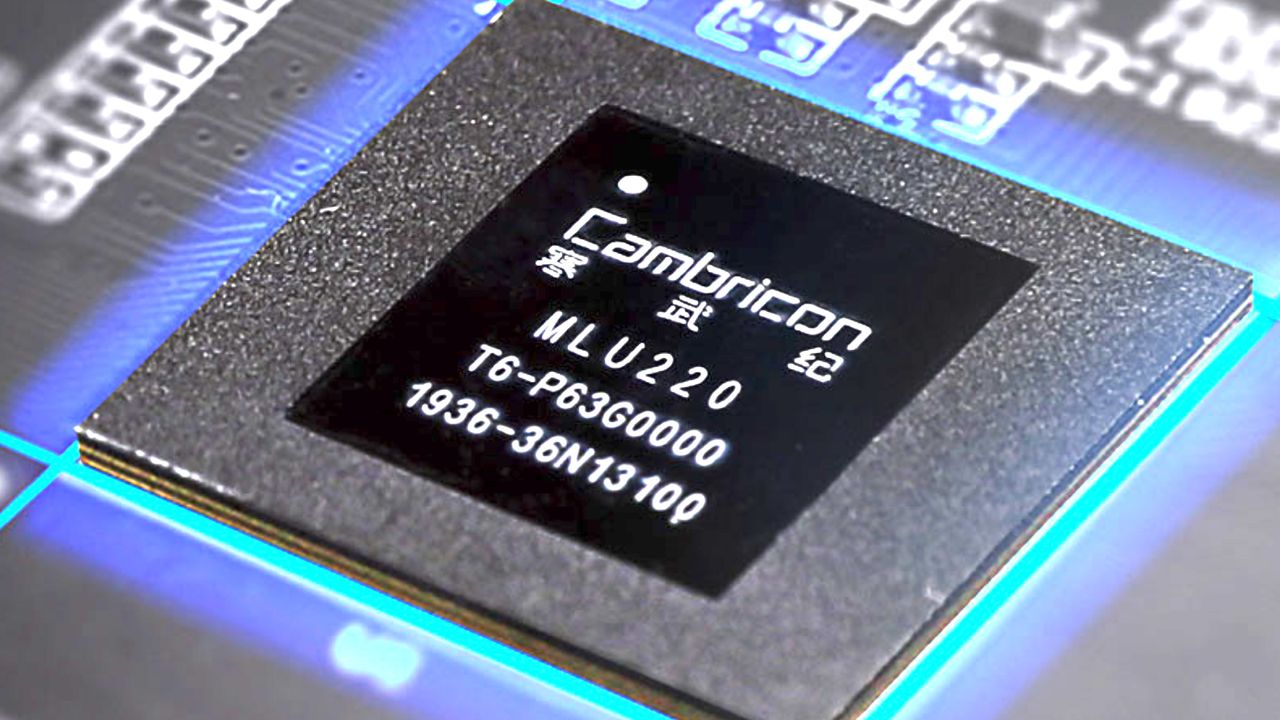
Cambricon's Ambitious AI Chip Push Faces Critical Hurdles
Cambricon Technologies is embarking on an exceptionally aggressive production ramp-up, aiming to deliver 500,000 artificial intelligence (AI) accelerator chips in 2026. This ambitious target, which includes 300,000 units of its advanced Siyuan 590 and 690 processors, represents a significant leap from the estimated 142,000 units produced in 2025. The move underscores China's intensified drive for domestic hardware self-sufficiency in the wake of global geopolitical shifts and export controls impacting access to foreign technology.
Industry Impact
Cambricon's bold expansion is a direct response to China's strategic imperative to reduce reliance on foreign semiconductor technology, particularly after Nvidia's effective exit from the Chinese market. The broader AI chip market is experiencing explosive growth, with projections indicating a rise from USD 73.87 billion in 2024 to USD 468.9 billion by 2032, at a compound annual growth rate (CAGR) of 25.98%. Another analysis forecasts the AI chips market to increase by USD 902.65 billion with an 81.2% CAGR from 2024 to 2029. The Asia-Pacific region, driven by government initiatives promoting self-reliance, is emerging as the fastest-growing segment in this market.
The push for domestic AI chips is not isolated to Cambricon; other Chinese players like Huawei are also significantly increasing their chip output, intensifying competition for limited manufacturing resources. This collective effort is bolstered by strong government support and rising domestic demand, with China mandating the use of domestically developed AI chips in all state-funded data centers under construction. Cambricon has already secured ByteDance as a major customer and anticipates expanding its engagements with Alibaba.
Manufacturing Complexities and Supply Chain Constraints
Despite the ambitious targets, Cambricon faces substantial manufacturing challenges. The company primarily relies on Semiconductor Manufacturing International Corporation's (SMIC) 7nm "N+2" production process. However, current yield rates for Cambricon's Siyuan 590 and 690 chips are reported to be around 20%, meaning only one in five chips produced is usable. This stands in stark contrast to leading foundries like TSMC, which achieve over 60% yields on their more advanced 2nm processes.
A critical bottleneck for Cambricon and other Chinese chipmakers is the limited supply of High Bandwidth Memory (HBM) and LPDDR components. The global HBM market is experiencing a significant scarcity, with demand outstripping manufacturing capacity. Major HBM producers have already booked out their 2025 supply, and the market is expected to remain structurally undersupplied well into 2026. This scarcity is driven by the exponential growth in AI workloads, which require vast amounts of high-speed memory. While some analysts predict a potential double-digit drop in HBM prices in 2026 due to increased supply outpacing demand, the immediate future remains challenging for securing these crucial components.
Key Highlights Summary
| Metric | Details |
|---|---|
| Cambricon 2026 AI Chip Target | 500,000 units |
| Cambricon 2025 AI Chip Production (Estimated) | 142,000 units |
| Cambricon Siyuan 590/690 Yield Rate | ~20% |
| Global AI Chip Market (2024) | USD 73.87 billion |
| Global AI Chip Market (2032 Projection) | USD 468.9 billion |
| HBM Supply Outlook | Structurally undersupplied until at least 2026 |
Expert Verdict
Cambricon's ambitious production targets for 2026 highlight China's unwavering commitment to achieving self-sufficiency in AI hardware. The significant ramp-up, supported by government mandates and strong domestic demand, positions Cambricon as a key player in this national strategy. However, the path to achieving these goals is fraught with considerable technical and supply chain challenges. The persistently low manufacturing yields at SMIC for advanced nodes, coupled with the global scarcity and competition for High Bandwidth Memory, represent critical bottlenecks that could impede Cambricon's ability to meet its aggressive targets. While China's domestic AI chip ecosystem is rapidly evolving, a substantial performance and efficiency gap still exists compared to global leaders. The success of Cambricon's expansion will ultimately hinge on its ability to overcome these fabrication hurdles and secure a consistent supply of essential components, thereby demonstrating the true potential of China's indigenous AI hardware capabilities.