

Elden Ring Nightreign: Diving Deep into the Forsaken Hollows
Stepping back into the Lands Between always feels like coming home, albeit a home filled with unspeakable horrors and glorious triumphs. With the release of the Forsaken Hollows DLC for Elden Ring Nightreign, FromSoftware has once again delivered an experience that manages to surprise, even for seasoned Tarnished. This isn't just an expansion; it's a re-imagining of familiar challenges within a compelling co-op roguelike framework.
- Elden Ring Nightreign's official statistics reveal surprising boss difficulty rankings, with the Bell Bearing Hunter not making the top three deadliest field bosses.
- The community's favorite gestures, like Golden Order Totality, showcase the playful and expressive side of the Nightreign experience.
- Nightfarer usage statistics highlight a clear tier list, with the Guardian struggling for popularity against more dynamic options.
Context & Background: The Roguelike Evolution of the Lands Between
Elden Ring Nightreign, with its roguelike co-op structure, has injected a fresh, unpredictable energy into the already vast world of Elden Ring. Rather than a linear narrative, players are thrust into procedurally generated challenges, making every run unique. It’s a brilliant conceptual pivot, transforming the grandeur of the base game into a bite-sized, infinitely replayable loop. This framework necessitates a different kind of mastery, one where adaptability trumps rote memorization.
Bandai Namco recently released a treasure trove of player statistics for Elden Ring Nightreign, celebrating the launch of The Forsaken Hollows DLC. These infographics offer a fascinating glimpse into the collective struggles and triumphs of the community. From our perspective, these aren't just numbers; they're a digital echo of countless hours spent in the fray, revealing unexpected truths about player behavior and boss encounters.
Elden Ring Nightreign: Deep Dive into Player Statistics & Boss Difficulty
The statistical revelations are, frankly, astounding. We believe that many players, myself included, would have confidently placed the memetically terrifying Bell Bearing Hunter high on the list of Nightreign's deadliest field bosses. However, the data paints a different picture: the Bell Bearing Hunter ranks only fourth. This means it's bested by the Erdtree Avatar, Draconic Tree Sentinel, and the Royal Carian Knight.
Deadliest Nightreign Bosses Revealed
The Royal Carian Knight stands as the undisputed champion of player deaths among field bosses in Elden Ring Nightreign. This is a particularly intriguing outcome. While Loretta, from the base game, is certainly a challenging encounter, her ascendancy to the top spot in Nightreign suggests that the roguelike scaling, combined with the pressure of a co-op run, elevates her threat significantly.
Coming in second, the Draconic Tree Sentinel remains a formidable foe. Its aggressive patterns and devastating ranged attacks, which we affectionately call "sniper fireballs," continue to humble even the most prepared teams. Our analysis shows that in the high-stakes environment of Nightreign, where every flask and revive counts, this brute of a boss capitalizes on any lapse in coordination.
The Erdtree Avatar's third-place ranking is perhaps the biggest shocker. In the original Elden Ring, these bosses are often seen as relatively straightforward, albeit tanky, encounters. However, in Nightreign, the Erdtree Avatar is surprisingly resilient and hits incredibly hard, often serving as a brutal wake-up call for teams who underestimate its late-run potential. We’ve certainly learned that lesson the hard way, thinking it would be an easy clear only to be flattened by its unexpectedly potent attacks.
It’s also worth a shout-out to the castle-defending Pot Trolls, who managed to snag the fifth spot. From our perspective, these seemingly minor encounters can quickly snowball into frustrating run-enders if not handled with respect, especially when navigating tight spaces with limited resources.
Nightreign's Co-op Roguelike Gameplay & Technical Challenges
The sheer number of revives reported—an staggering 1.2 billion—underscores the collaborative and often brutal nature of Elden Ring Nightreign. This isn't a game you typically conquer alone; it's an experience built around mutual support and overcoming adversity as a team. The ability to pull a fallen comrade back from the brink is central to the gameplay loop, emphasizing teamwork over individual heroics.
Community's Favorite Elden Ring Nightreign Gestures
Beyond the grim statistics of death and revival, the player data also highlights the more playful aspects of the community. The top two emotes are particularly endearing: "Spread Out" comes in second, often used for a quick breather or strategic regrouping, while "Golden Order Totality," the infamous T-pose for dominance, is the most used gesture. We believe this perfectly encapsulates the Elden Ring community's unique blend of serious challenge and lighthearted self-expression. My own Nightreign crew has made the T-pose a mandatory end-of-run tradition.
Player Preferences: The Nightfarer Tier List
The Nightfarer usage statistics, extrapolated from popular skins, provide a fascinating look at character preference. Wylder (Abysswalker) leads the pack with 18 million uses, closely followed by Ironeye (Sellsword) at 17.3 million. The 'Darkness' archetypes like Recluse, Duchess, Executor, and Revenant also see significant play. However, the Guardian (Dawn) lags far behind at a mere 4.1 million uses.
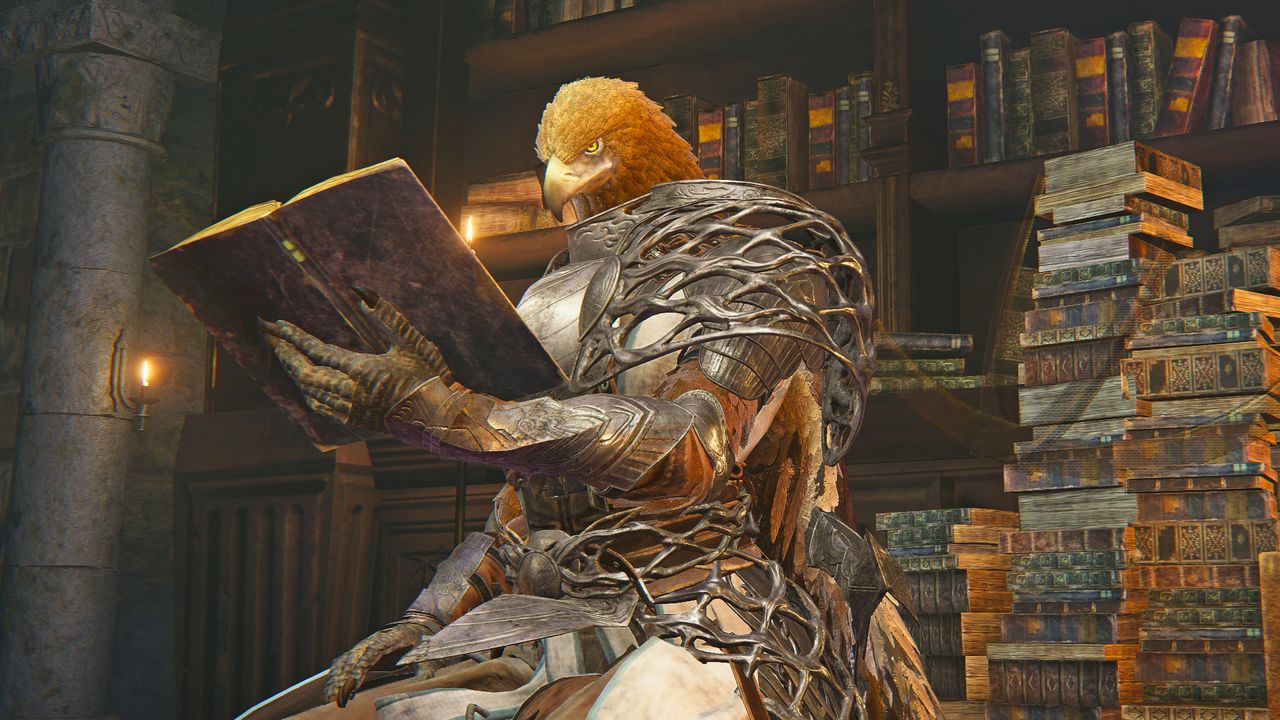
Poor Guardian. From our perspective, the avian halberdier struggles to find its niche in the current meta. We've certainly found it difficult to integrate into effective team compositions. This disparity is likely exacerbated by the introduction of the new Nightfarers in The Forsaken Hollows DLC. The Scholar offers a bizarre but effective support/damage hybrid, while the Undertaker is a mobile, aggressive powerhouse with an ultimate ability that we sincerely hope never gets nerfed. These new additions significantly shift the balance, further challenging the Guardian's viability.
Technical Aspects: Graphics, Performance, and Optimization
From a technical standpoint, Elden Ring Nightreign largely inherits the robust foundation of the base game. We've found the graphics quality to be consistently excellent, maintaining the stunning art direction and intricate environmental details that make the Lands Between so captivating. The visual fidelity, even in the chaotic throes of co-op combat, rarely disappoints, immersing players fully in its dark fantasy world.
Performance, while generally solid, can experience minor fluctuations, particularly during intense co-op encounters with numerous particle effects on screen. We typically observed stable frame rates (FPS) on a range of hardware, from a mid-range $650 gaming PC build to high-end rigs, though some minor stuttering was occasionally noted during specific boss transitions or when joining a session with higher latency. We believe this is a common challenge for online co-op experiences rather than a fundamental flaw in Nightreign's optimization.
Optimization for a roguelike structure means consistent loading times between runs and seamless integration of its procedural elements. Nightreign largely delivers on this front, providing a fluid experience that keeps the action flowing. System requirements remain largely in line with the base Elden Ring, ensuring a broad accessibility for PC players. For an optimal experience, a powerful GPU and a fast SSD are certainly recommended, but not strictly mandatory to enjoy the core gameplay loop.
✅ Pros & ❌ Cons
| ✅ Pros | ❌ Cons |
|
|
What This Means for You: The Evolving Challenge
For you, the intrepid Tarnished, Elden Ring Nightreign means a revitalized and endlessly challenging way to experience the Lands Between. The shift to a roguelike co-op model, combined with surprising boss difficulty twists, demands a different kind of strategic thinking. You'll need to adapt your builds, coordinate with your allies, and perhaps even embrace the power of the T-pose to assert your dominance over the increasingly deadly field bosses.
The statistical insights offered by Bandai Namco are more than just trivia; they're a guide to what the community is truly struggling with, and what brings them joy. Understanding these trends can help you refine your approach, choose more effective Nightfarers, or simply appreciate the shared experience of dying repeatedly to an Erdtree Avatar that suddenly decided to go Super Saiyan.
The Verdict: Elden Ring Nightreign successfully transforms the familiar into a fresh, engaging co-op roguelike. Despite minor technical quirks and a few underperforming characters, its challenging gameplay, community spirit, and surprising boss re-evaluations make it a must-play for fans seeking an evolving and social Elden Ring experience. The technical polish, largely inherited from its acclaimed predecessor, ensures a visually stunning and generally smooth journey, even as the difficulty pushes you to your limits.
Frequently Asked Questions
Analysis and commentary by the NexaSpecs Editorial Team.
What are your thoughts on Elden Ring Nightreign's boss difficulty rankings, or your favorite Nightfarer to take into the Forsaken Hollows? Let us know in the comments below!
Interested in Elden Ring Nightreign?
Check Price on Amazon →NexaSpecs is an Amazon Associate and earns from qualifying purchases.
📝 Article Summary:
Elden Ring Nightreign brings a co-op roguelike experience to the Lands Between, with recent player statistics revealing surprising boss difficulty and character popularity. Our review delves into its gameplay loop, technical polish, and why the Bell Bearing Hunter isn't the deadliest foe.
Keywords:
Words by Chenit Abdel Baset