

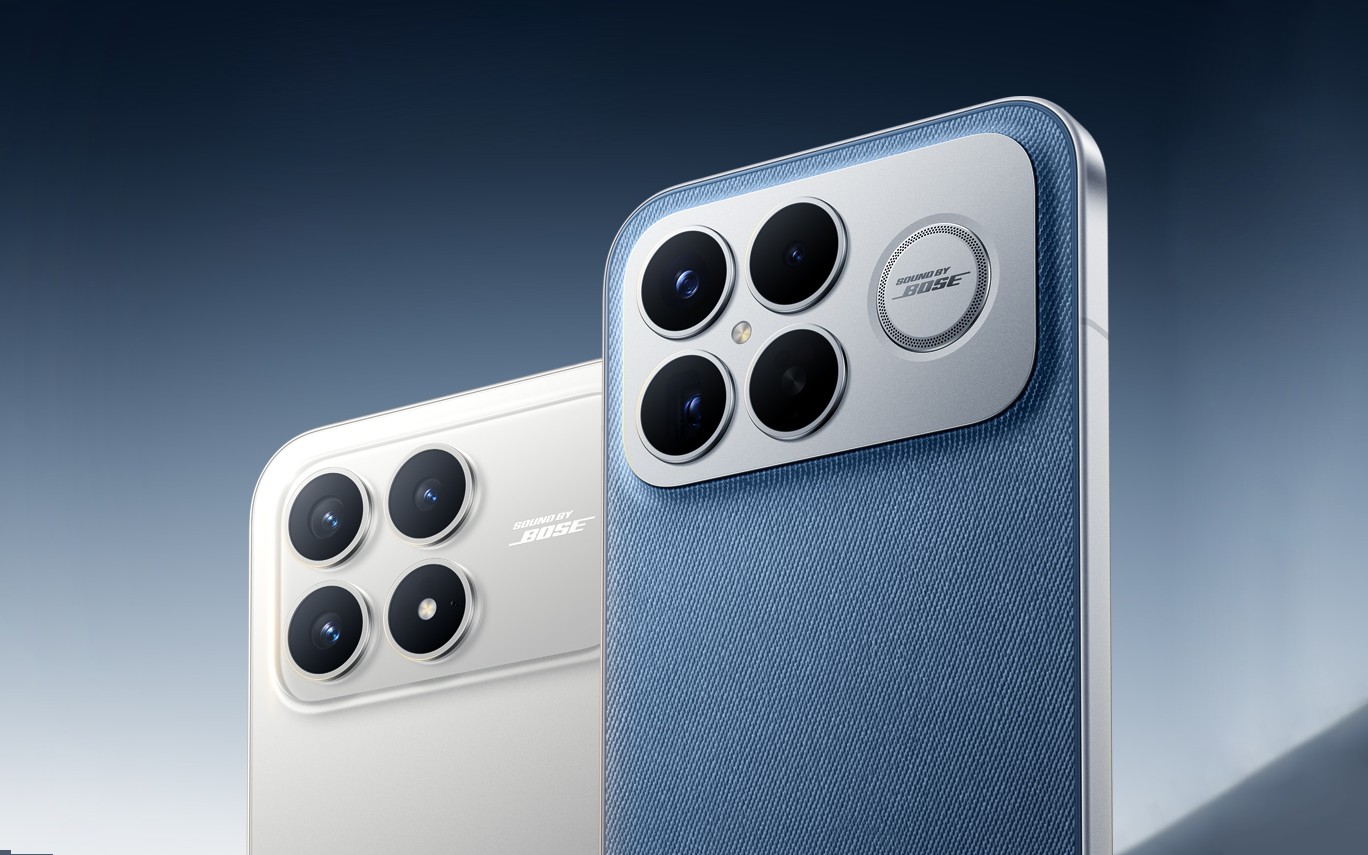
Introduction: So, Poco just dropped the F8 series, and if you're anything like me, your head is probably spinning trying to figure out which one's the right fit. We've got the F8 Pro and the F8 Ultra, both rocking some serious hardware, but also carrying a bit of a steeper price tag than we're used to. Is that extra cash worth it for the Ultra, or does the Pro strike that perfect balance? Let's dive in and see what's what, because choosing your next daily driver is a big deal, and you don't want to mess it up.
Key Specifications (Fact-Checked)
| Feature | Poco F8 Pro | Poco F8 Ultra |
|---|---|---|
| Display | 6.59" AMOLED, 1156 x 2510 pixels (~419 ppi), 120Hz, 3500 nits peak, Dolby Vision, HDR10+, Corning Gorilla Glass 7i | 6.9" AMOLED, 1200 x 2608 pixels (~416 ppi), 120Hz, 3500 nits peak, 12-bit Dolby Vision, HDR10+ |
| Processor | Qualcomm Snapdragon 8 Elite (Octa Core up to 4.32GHz) | Qualcomm Snapdragon 8 Elite Gen 5 (Octa Core up to 4.6GHz) |
| RAM | 12GB (LPDDR5X) | 12GB / 16GB (LPDDR5X) |
| Storage | 256GB / 512GB (UFS 4.1) | 256GB / 512GB (UFS 4.1) |
| Rear Camera | 50MP Main (f/1.88, OIS) + 50MP Telephoto (2.5x zoom) + 8MP Ultrawide | 50MP Main (Light Fusion 950, f/1.67, OIS) + 50MP Telephoto + 50MP Ultrawide |
| Front Camera | 20MP | 32MP |
| Battery | 6210mAh | 6500mAh |
| Charging | 100W wired, 22.5W reverse | 100W wired, 50W wireless, 22.5W reverse |
| Operating System | Android 16, HyperOS 3 | Android 16, HyperOS 3 |
| Durability | IP68 dust/water resistance | IP68 dust/water resistance |
| Audio | Bose-tuned stereo speakers, Dolby Atmos | Bose 2.1-channel stereo speaker system with woofer, Dolby Atmos |
Alright, let's get down to brass tacks. Both of these phones are packing some serious heat, but they're clearly aimed at slightly different folks. The F8 Ultra, as its name suggests, is the beefier sibling, but the F8 Pro isn't exactly a slouch. It's a real head-scratcher, especially with the price differences.
First off, performance. The F8 Pro rocks the Snapdragon 8 Elite, while the Ultra steps it up with the Snapdragon 8 Elite Gen 5. Now, on paper, that 'Gen 5' sounds like a big jump, and it is. You're getting slightly higher clock speeds on the prime cores with the Ultra, meaning it'll chew through demanding games and heavy multitasking a touch faster. For most of us, though, the standard Snapdragon 8 Elite in the Pro is already overkill for daily tasks. Both of these chips will make your apps fly and games run smooth as silk. It's like comparing a sports car to a slightly faster sports car – both are incredibly quick.
Now, let's talk screens. This is where things get interesting and a bit counter-intuitive. The F8 Ultra boasts a larger 6.9-inch AMOLED display, which is awesome for media consumption. However, Poco made a curious choice here; it's a 1200p+ resolution (1200 x 2608 pixels). The F8 Pro, on the other hand, is a tad smaller at 6.59 inches, but its 1156 x 2510 pixel resolution actually gives it a slightly higher pixel density (around 419 ppi vs. 416 ppi on the Ultra). Both are 120Hz OLED panels with insane 3500 nits peak brightness and Dolby Vision, so they're going to look vibrant and smooth. But if you're coming from the F7 Ultra's 6.67-inch 1440p+ screen, the F8 Ultra is a step up in size but a tiny step down in pure pixel count. It's not a dealbreaker by any stretch, but it's something to keep an eye on if you're a pixel peeper.
Cameras are another big differentiator. The F8 Ultra goes all out with a triple 50MP setup, including a dedicated 50MP telephoto and ultrawide. That Light Fusion 950 sensor on the main camera sounds like it means business, promising great low-light shots. The F8 Pro isn't far behind with a 50MP main, a 50MP telephoto with 2.5x optical zoom, and an 8MP ultrawide. For most folks, the F8 Pro's camera array will be more than enough to capture stunning photos. But if you're really into photography, especially ultrawide shots or want that extra detail, the Ultra might just edge it out.
Battery life and charging are pretty solid across the board. The F8 Ultra gets a beefier 6500mAh cell compared to the F8 Pro's 6210mAh, which is a nice bump. Both support blistering 100W wired HyperCharge, meaning you'll be topped up in no time. The Ultra adds 50W wireless charging to the mix, which is a handy convenience if you're already in that ecosystem. Both also offer 22.5W reverse charging, which can be a lifesaver for your earbuds or a friend's dying phone.
And here's a neat trick: both phones boast IP68 dust and water resistance, so a little splash or dust shouldn't send them to an early grave. Plus, the collaboration with Bose for audio tuning is a big deal, especially for the F8 Ultra with its 2.1-channel speaker system. That's a serious upgrade for anyone who cares about sound quality directly from their phone.
Let's talk money, because that's usually the kicker. Poco has indeed hiked the prices, as the original poll mentioned. In Malaysia, for example, the F8 Pro starts around RM2,499, and the F8 Ultra at RM3,199. But hold your horses, because early bird deals can knock a significant chunk off, bringing the F8 Pro down to RM2,199 and the Ultra to RM2,799. That's a considerable saving, making the Ultra's premium a bit more digestible.
Poco F8 Pro
- Pros:
- Still a flagship-level processor (Snapdragon 8 Elite).
- Excellent AMOLED display with high pixel density.
- Very capable triple camera setup with telephoto.
- Large battery with super-fast 100W wired charging.
- IP68 water and dust resistance.
- Bose-tuned audio.
- More compact form factor.
- More affordable, especially with early bird pricing.
- Cons:
- Slightly less powerful processor than the Ultra.
- No wireless charging.
- Ultrawide camera is 8MP, not 50MP like the Ultra.
- Smaller battery than the Ultra.
Poco F8 Ultra
- Pros:
- Cutting-edge Snapdragon 8 Elite Gen 5 processor.
- Massive 6.9-inch AMOLED display for immersive viewing.
- Triple 50MP camera setup, including a high-res ultrawide.
- Largest battery in the series (6500mAh).
- Includes 50W wireless charging.
- Bose 2.1-channel stereo speaker system for superior audio.
- IP68 water and dust resistance.
- Cons:
- Higher price point.
- Lower pixel density on the display compared to F8 Pro and F7 Ultra.
- Larger size might not be for everyone.
Final Verdict
So, who should actually care about these new Poco phones? If you're currently rocking an older device and looking for a serious upgrade without completely breaking the bank, either of these F8 series phones will knock your socks off. They're both powerhouses with amazing screens, fast charging, and solid cameras.
If you're a hardcore gamer, a content creator, or someone who just wants the absolute bleeding edge of mobile tech and doesn't mind shelling out a bit extra, the Poco F8 Ultra is your horse. That Snapdragon 8 Elite Gen 5, the massive screen, the full 50MP camera suite, and especially the wireless charging and advanced Bose audio system really justify the 'Ultra' moniker. It's a beast, plain and simple.
However, if you're after incredible value and still want a top-tier experience, the Poco F8 Pro is a fantastic option. You're getting 90% of the Ultra's performance and features for a noticeably lower price, especially with those early bird discounts. The slightly smaller, denser screen might even be a plus for some, and the camera system is still nothing to sneeze at. It's a smart buy for someone who knows a good deal when they see one and doesn't feel the need to chase every single spec bump. Honestly, you can't go wrong with either, but your wallet and your priorities will make the final call.
Interested in Poco F8 Pro, Poco F8 Ultra?
Check Price on Amazon →NexaSpecs is an Amazon Associate and earns from qualifying purchases.
📝 Article Summary:
Poco has launched its F8 series, featuring the F8 Pro and F8 Ultra, both offering significant upgrades but with a price hike. The F8 Ultra boasts the latest Snapdragon 8 Elite Gen 5, a larger 6.9-inch display, and a triple 50MP camera setup, while the F8 Pro offers a slightly smaller, denser 6.59-inch screen and a Snapdragon 8 Elite chip at a more attractive price point.
Keywords:
Words by Chenit Abdel Baset