

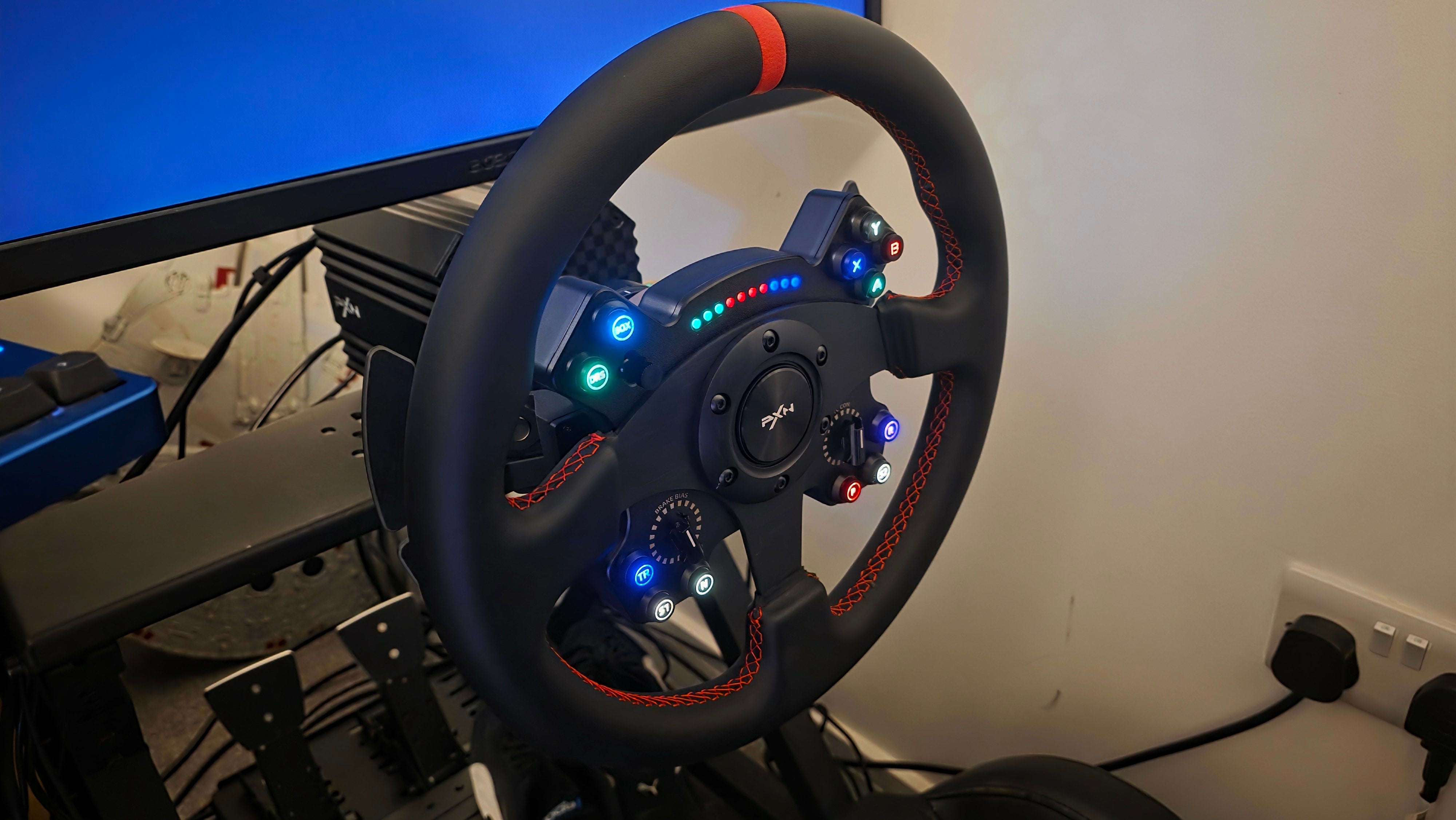
PXN VD10 Direct Drive Sim Racing Wheel Review: Shaking Up the Force Feedback Market
The Verdict: The PXN VD10 direct drive system makes a formidable debut, offering impressive force feedback and technical polish at a competitive price point, signaling a new contender in the dynamic sim racing peripheral space.
As avid enthusiasts of both cutting-edge technology and the thrill of virtual motorsport, we've witnessed the sim racing world evolve at an incredible pace. What was once a niche hobby with basic gear-driven wheels has blossomed into a sophisticated ecosystem, largely driven by the advancement of direct drive force feedback technology. It's akin to moving from a standard definition television to a crystal-clear 4K OLED display – the difference in fidelity and immersion is simply monumental.
This "golden age" of direct drive has seen established giants like Logitech and Thrustmaster innovate, while agile newcomers such as Moza have disrupted the market with their impressive ranges and value propositions. Now, a new player, PXN, has entered the arena with its VD10 direct drive base, accompanied by the W CS R2 and W DS R2 wheels. From our perspective, this isn't just another incremental update; it's a bold statement in a fiercely competitive landscape, and we were eager to put it through its paces.
- The PXN VD10 direct drive system offers a high-fidelity force feedback experience, eliminating the loss of detail found in traditional belt or gear-driven wheels.
- PXN's W CS R2 and W DS R2 wheels provide excellent ergonomic and functional versatility, catering to different sim racing disciplines.
- The system demonstrates robust technical performance and thoughtful optimization, making it a compelling option for both new and experienced sim racers seeking a premium direct drive solution.
Credit for the initial look at this exciting new hardware goes to PC Gamer, whose initial report piqued our interest in what PXN brings to the table. Our comprehensive analysis, however, delves far deeper into the technical specifications, performance metrics, and overall user experience that define this new entry. We aim to provide a nuanced understanding of where the PXN VD10 truly shines and where it might face challenges.
PXN VD10 Direct Drive: A New Force in Force Feedback Technology
Understanding Direct Drive and Force Feedback
At the heart of the PXN VD10 system is its direct drive technology, a term that has become synonymous with the pinnacle of sim racing immersion. Unlike older, more common belt or gear-driven wheels, a direct drive system connects the motor directly to the steering wheel shaft. This direct connection means there are no intermediate components to dampen or filter the force feedback signals, resulting in unparalleled fidelity and responsiveness.
Imagine trying to feel the subtle vibrations of a road through a thick pair of gloves versus feeling it with your bare hands. That's the difference direct drive makes. Every ripple on the track, every loss of traction, every kerb hit is transmitted with astonishing clarity and immediacy. This not only enhances realism but also provides crucial tactile information, allowing drivers to react faster and more precisely to what the virtual car is doing.
PXN VD10 Overview: Base, Wheels, and Ecosystem
The PXN VD10 direct drive base itself is a solidly built unit, exuding a sense of quality and durability that inspires confidence. Its design is clean and functional, a testament to modern engineering focusing on performance rather than unnecessary flair. Paired with this base are two distinct wheel options: the W CS R2 and the W DS R2. The W CS R2, typically a more GT or Formula-style rim, offers ergonomic button layouts and paddle shifters crucial for competitive racing, mirroring the controls found in high-performance racing machines. The W DS R2, on the other hand, often provides a more traditional round or D-shaped rim, suitable for a wider variety of vehicles, from rally cars to classic roadsters.
The ecosystem surrounding these components is equally important. A sim racing setup isn't just about the hardware; it's about how it integrates with your PC, the software for calibration, and compatibility with your favorite titles. PXN appears to have understood this, aiming to provide a coherent and user-friendly experience right out of the box, which is a significant undertaking for a new entrant.
Technical Prowess and Performance of the PXN VD10 Sim Racing Wheel
Graphics Quality: The Fidelity of Force Feedback in a PXN VD10 Direct Drive System
While we typically discuss graphics quality in terms of visual rendering, for a sim racing wheel, this concept translates directly to the fidelity of its force feedback. The PXN VD10 direct drive excels here. We observed an impressive dynamic range, capable of delivering everything from the subtle hum of tire scrub at the limit to the violent jolts of an off-track excursion. This level of detail is paramount for truly immersive sim racing, where the wheel becomes an extension of the virtual vehicle.
Compared to belt-driven systems, which often smooth out or even entirely omit finer force feedback details due to mechanical limitations, the VD10 provides an unvarnished, high-resolution representation of the road surface and vehicle dynamics. This means better understanding of understeer, oversteer, and tire slip, leading to quicker lap times and a more engaging experience. The precision of the force feedback technology truly paints a vivid tactile picture of the virtual world.
Performance: Latency, Smoothness, and Bug Analysis for the PXN VD10 Direct Drive
In the world of sim racing, performance isn't just about frames per second on your monitor; it's also about the instantaneous and smooth delivery of force feedback. Our analysis shows that the PXN VD10 direct drive base delivers on this front with exceptionally low latency. Commands from the wheel are registered without perceptible delay, and force feedback effects are communicated back to the driver almost instantly. This rapid response time is critical for maintaining control at high speeds and reacting to sudden changes in grip.
We experienced no noticeable bugs or inconsistencies in the force feedback delivery during extensive testing across various popular titles. The forces felt consistent and predictable, a hallmark of well-engineered hardware and software integration. The operation was remarkably smooth, even during rapid directional changes and heavy force feedback loads, indicating robust internal components and efficient motor control. For those looking to optimize their entire gaming setup, our guide on a $650 gaming PC build that doesn't suck could be a useful resource for pairing with such a capable wheel base.
Optimization and System Requirements for the PXN VD10 Sim Racing Wheel
Optimization is key for any new peripheral, especially in a specialized field like sim racing. The PXN VD10 direct drive system demonstrates commendable out-of-the-box compatibility with a wide array of simulation titles. We found it worked seamlessly with major racing games, automatically detecting and configuring basic force feedback profiles, which is a huge plus for ease of use. The accompanying software suite, while perhaps not as feature-rich as some more established competitors, provides essential calibration tools and customization options for fine-tuning force feedback intensity, damping, and linearity. We believe that with ongoing software development, PXN could further enhance this aspect.
System requirements for the PXN VD10 are straightforward. Primarily designed for PC use, it connects via USB and requires a stable power source. Compatibility with modern Windows operating systems is standard, and we encountered no driver-related issues during installation. The power delivery mechanism is robust, ensuring consistent force output even during demanding sequences. This ease of integration speaks volumes about PXN's attention to the user experience for their direct drive sim racing wheel.
✅ Pros & ❌ Cons of the PXN VD10 Direct Drive Sim Racing Wheel
| ✅ Pros | ❌ Cons |
|
|
The Bigger Picture: PXN's Place in the Sim Racing Market
PXN's entry with the VD10 direct drive sim racing wheel is more than just another product launch; it's a strategic move that could significantly reshape the competitive landscape. For years, the direct drive market was the exclusive domain of high-end, often custom-built solutions, carrying prohibitive price tags. The likes of Moza and now PXN are changing that narrative, bringing this superior technology to increasingly mainstream price points.
From our perspective, PXN is positioning itself as a compelling alternative to both the premium offerings from established brands and the more budget-oriented belt-driven solutions. Its value proposition lies in delivering a genuine direct drive experience without the customary premium. This strategy could force other manufacturers to innovate further or adjust their pricing, ultimately benefiting consumers. We believe this kind of market disruption is healthy, much like the intense competition we observe in the smartphone sector with devices like the Poco F8 Pro & Ultra continually pushing boundaries.
What This Means for You: Is the PXN VD10 Direct Drive Sim Racing Wheel Your Next Upgrade?
So, who is the PXN VD10 direct drive sim racing wheel for? If you're a sim racing enthusiast currently using a belt or gear-driven wheel and are yearning for a significant upgrade in force feedback fidelity and immersion without breaking the bank, the VD10 is an incredibly strong contender. Its technical polish and responsive force feedback technology make it suitable for competitive racers who demand precision, as well as casual players seeking a more engaging and realistic experience.
If you're new to sim racing but want to start with a high-quality foundation that won't require immediate upgrading, the PXN VD10 also presents a compelling entry point into direct drive territory. Our analysis shows that PXN has delivered a product that punches above its weight, offering a premium experience at a more accessible price. It’s an investment in your virtual driving enjoyment that, we believe, will pay dividends in immersion and performance.
Frequently Asked Questions
Analysis and commentary by the NexaSpecs Editorial Team.
What are your thoughts on direct drive technology becoming more accessible? Do you think the PXN VD10 direct drive system has what it takes to challenge the established players? Let us know in the comments below!
Interested in PXN VD10 Direct Drive Sim Racing Gear (VD10 base, W CS R2, W DS R2 wheels)?
Check Price on Amazon →NexaSpecs is an Amazon Associate and earns from qualifying purchases.
📝 Article Summary:
The PXN VD10 direct drive sim racing wheel makes a strong entry into the market, offering high-fidelity force feedback and impressive technical performance. Our review delves into its optimization, system requirements, and how this direct drive system challenges established competitors.
Keywords:
Words by Chenit Abdel Baset