

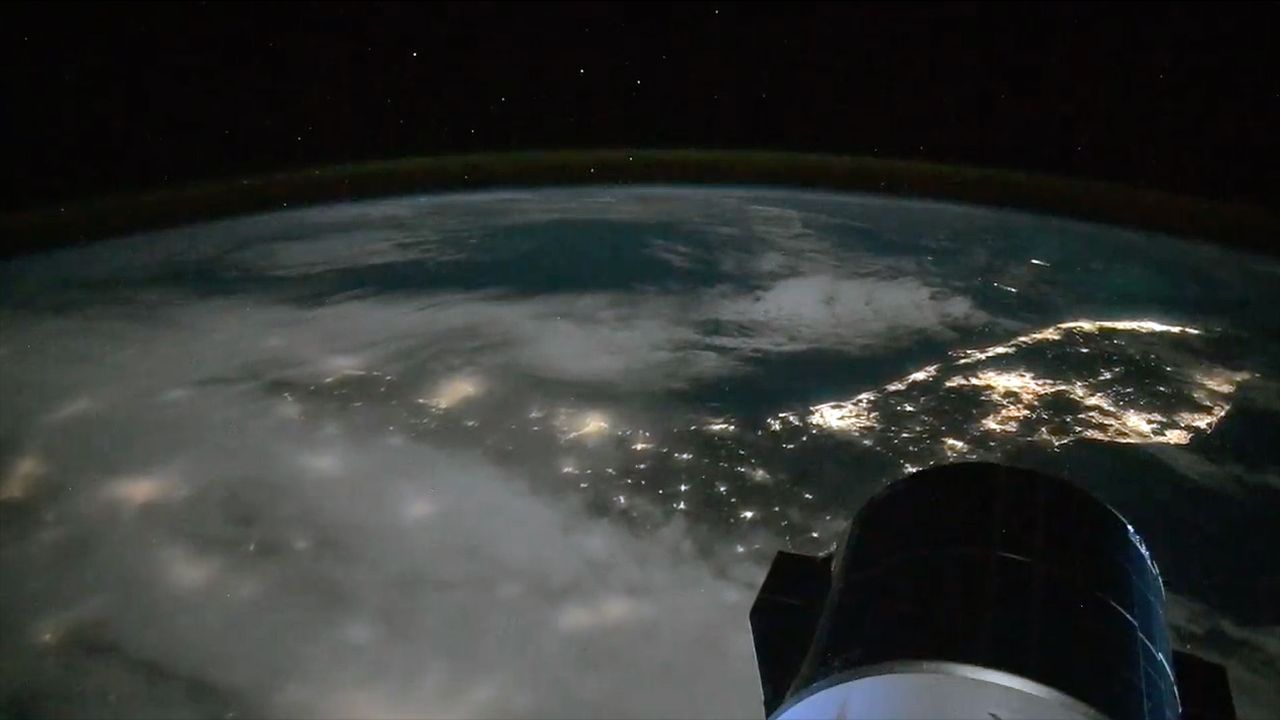
Expedition 73: Settling into Orbital Life on the ISS
- Newly arrived and veteran Expedition 73 astronauts are navigating the complex transitions of life aboard the International Space Station.
- Sustained human presence in orbit necessitates advanced life support systems and rigorous physical and psychological regimens to counteract microgravity's effects.
- The history of orbital endeavors, from early pioneers to the collaborative ISS, underscores humanity's relentless pursuit of understanding and mastering space.
✅ Pros & ❌ Cons
| ✅ Pros | ❌ Cons |
|
|
The International Space Station (ISS) stands as a beacon of human ingenuity, a testament to what international collaboration can achieve beyond Earth’s confines. As the latest crew members of Expedition 73 settle into their new orbital life, we are reminded of the intricate dance between human physiology, cutting-edge technology, and the enduring spirit of exploration. This week, we saw the incoming and outgoing crews of Expedition 73 preparing for their transitions, a crucial period of handover and acclimatization aboard the orbital outpost.
Our analysis shows that the integration of new personnel into the ISS ecosystem is a meticulously planned operation, encompassing everything from adapting to microgravity to understanding the complex systems that sustain life. This phase is critical for maintaining the seamless operation of the station and ensuring the continuity of vital scientific research.
Critical Analysis: The Mechanics of Orbital Life and Human Adaptation
Life in low Earth orbit presents a unique set of challenges that demand continuous innovation and adaptation from both technology and the human body. The mechanics of orbital life are far removed from our terrestrial existence, requiring a deep understanding of physics, biology, and engineering.
Physical Regimen in Microgravity
One of the most immediate and profound impacts of space on the human body is the absence of significant gravity. Microgravity research has extensively documented the physiological changes astronauts experience, including bone density loss, muscle atrophy, and cardiovascular deconditioning. To counteract these effects, a rigorous physical regimen in microgravity is paramount.
Astronauts dedicate several hours each day to exercise, utilizing specialized equipment such as treadmills, stationary bikes, and resistance training devices. This intense schedule is a critical component of astronaut daily life challenges, aimed at mitigating long-term health consequences and ensuring mission success. Without such interventions, a prolonged stay in space could lead to irreversible damage.
The Environmental Control and Life Support System (ECLSS)
The Environmental Control and Life Support System (ECLSS) is arguably the most critical technological marvel aboard the ISS, enabling sustainable orbital living. This sophisticated network manages the station's atmosphere, maintains comfortable temperatures, and, most importantly, recycles water and oxygen. We believe the ECLSS represents a pinnacle of engineering, showcasing humanity's ability to create self-sustaining environments.
From regenerating oxygen through electrolysis to purifying wastewater for drinking, the ECLSS is a closed-loop system designed to minimize reliance on resupply missions. Its efficiency is vital for extended human spaceflight and future deep-space missions, making space station operations truly viable.
Navigating Psychological Challenges
Beyond the physical, the psychological toll of long-duration space missions is considerable. Astronauts face isolation, confinement, and the constant awareness of their precarious position hundreds of kilometers above Earth. Our perspective highlights the critical role of psychological support, communication with Earth, and a structured daily routine in maintaining crew well-being.
Crew cohesion and morale are meticulously fostered through shared meals, recreational activities, and personal time. These strategies are essential for addressing the mental aspects of astronaut daily life challenges, ensuring that the crew remains mentally resilient throughout their mission.
The History of Human Endeavor in Orbit
The journey to establishing a permanent human presence in space is a rich mix woven with scientific breakthroughs, geopolitical rivalries, and unyielding human ambition. Understanding this history provides crucial context for current space station operations and future aspirations.
Early Orbital Pioneers
The dawn of human spaceflight began with the Soviet Union's Sputnik in 1957, followed by Yuri Gagarin's historic orbital flight in 1961. The United States quickly followed suit with Project Mercury, Gemini, and the monumental Apollo program, which landed humans on the Moon. These early endeavors, though brief, laid the foundational knowledge for how humans could survive and operate beyond Earth's atmosphere.
Later, the Salyut and Skylab stations represented the initial forays into long-duration orbital habitats, pushing the boundaries of human endurance and scientific exploration. These precursors provided invaluable data on the effects of microgravity and the requirements for sustained life support.
The Genesis of the International Space Station
The concept of a truly international orbital outpost emerged from the ashes of the Cold War, bringing together former adversaries in a common scientific pursuit. The ISS, a collaborative effort involving 15 nations, began construction in 1998. It evolved from a modular design, piece by piece, into the sprawling complex we see today. This project is a testament to global cooperation and its potential to achieve monumental feats.
The ISS serves as a unique laboratory for microgravity research, conducting experiments in biology, physics, astronomy, and human physiology that are impossible on Earth. It is also a proving ground for technologies essential for future long-duration missions to the Moon, Mars, and beyond. In fact, some of the advancements in orbital production seen in initiatives like Varda's In-Space Manufacturing directly benefit from the foundational knowledge and infrastructure developed on the ISS.
The Bigger Picture: Expedition 73's Role in Future Space Exploration
Expedition 73, like all missions before it, contributes significantly to our collective understanding of human limits and technological capabilities in space. The daily lives of these astronauts, their scientific endeavors, and their adaptation to orbital life are crucial data points for designing future missions.
We believe that the ongoing operations on the ISS are not merely about maintaining a presence in orbit, but about paving the way for the next giant leaps. The lessons learned about sustainable orbital living, advanced life support, and long-term human health are directly applicable to proposed lunar outposts and potential crewed missions to Mars. The continuous stream of microgravity research performed by missions like Expedition 73 refines our understanding of fundamental science and informs the design of next-generation spacecraft and habitats.
The Verdict: Expedition 73's orbital transitions underscore the profound complexities and triumphs of human spaceflight. From the intricate mechanics of sustaining life in microgravity to the rich history of humanity's reach for the stars, the International Space Station continues to be an indispensable laboratory and a symbol of our future in space, driving advancements in sustainable orbital living and space station operations.
Frequently Asked Questions
Analysis and commentary by the NexaSpecs Editorial Team.
What aspects of orbital life on the ISS intrigue you the most? Share your thoughts in the comments below!
📝 Article Summary:
Expedition 73 astronauts are settling into their new orbital life on the International Space Station, facing unique challenges and contributing to critical microgravity research. This period of transition highlights the intricate mechanics of sustainable orbital living and the historical advancements in human spaceflight.
Keywords:
Words by Chenit Abdel Baset